 Vancouver Trip Guide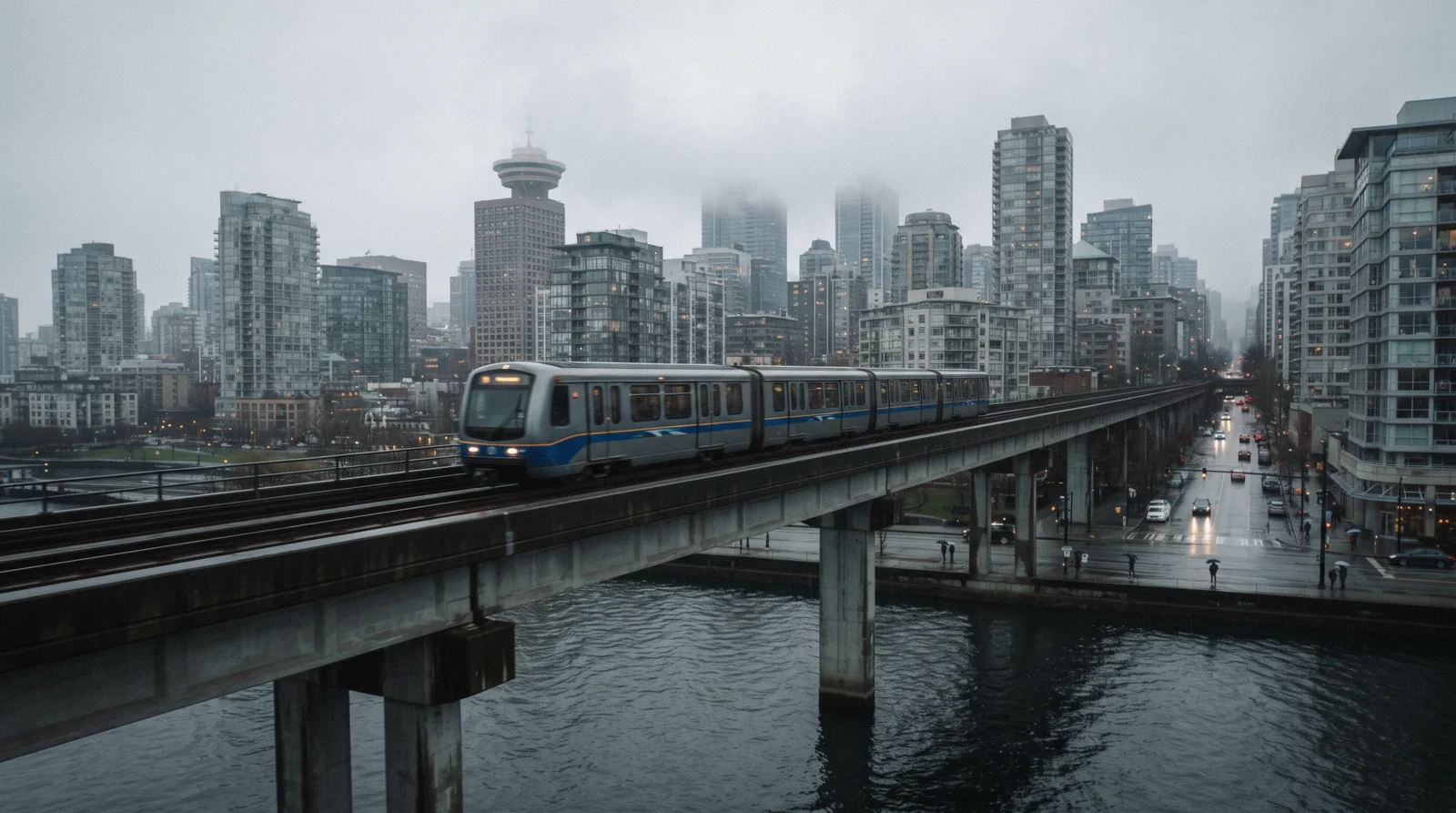
Getting Around Vancouver
Vancouver transit is one operator, three zones and a rule that quietly cancels the zones for most of the hours a visitor travels. TransLink runs the SkyTrain, the buses, the SeaBus and the commuter train, and its fares rose an average of 5% on 1 July 2026; the figures on this page are the ones the operator published on translink.ca and we read in Q3 2026. What follows is what a ride costs, which card to tap, how late the trains run, the two boat networks nobody explains, and the honest verdict on renting a car. The rest of the trip planning sits on the Vancouver plan hub, and what a day of it adds up to is on what Vancouver costs.
Quick answer What a ride costs, which card to tap, and whether you need a car
A single adult ride across one zone costs $2.06 (CA$2.85) on a Compass Card and $2.54 (CA$3.50) if you tap a bank card, on the TransLink fare sheet in force since 1 July 2026. Three zones exist on paper, but every trip starting after 6:30 pm on a weekday, and every trip at a weekend or on a statutory holiday, is charged as one zone, and buses are one zone at all hours. Children 12 and under ride free. Nobody visiting the city centre needs a car unless they are driving up a mountain.
Key takeaways
- Tapping a contactless bank card is the easy option, but it charges the CASH fare: the gap is CA$0.65 a trip, and the CA$6 Compass Card deposit is refundable, so the card pays for itself in ten rides
- The DayPass at $9.09 (CA$12.55) only wins on a day with four or more rides, which for most visitors means a day that crosses the water twice
- The SeaBus to Lonsdale Quay takes 12 minutes and is the cheapest boat ride in the city at a weekend, when the crossing drops to a one-zone fare; North Vancouver starts at the far dock
- Arriving at the airport? The Canada Line adds a charge that applies leaving YVR and not returning to it, explained on the airport-to-downtown page
- If you would rather hand the routing to somebody else on the first morning, the small-group hop-on hop-off loop covers twelve stops on one ticket
What A Ride Costs In 2026
Every adult and concession fare TransLink publishes for bus, SkyTrain and SeaBus, read on the operator's own pricing page in Q3 2026 and converted at CA$1 = US$0.7244. The fares rose an average of 5% on 1 July 2026, and no tax is added at the gate.
| Fare | Adult, tap a bank card | Adult, Compass stored value | Concession | When it applies |
|---|---|---|---|---|
| One zone | $2.54 (CA$3.50) | $2.06 (CA$2.85) | $1.67 (CA$2.30) | All bus trips, all weekend and holiday trips, all weekday trips starting after 6:30 pm |
| Two zones | $3.69 (CA$5.10) | $3.04 (CA$4.20) | $2.46 (CA$3.40) | Weekday daytime SkyTrain or SeaBus across one boundary, such as Waterfront to Lonsdale Quay |
| Three zones | $4.85 (CA$6.70) | $3.91 (CA$5.40) | $3.33 (CA$4.60) | Weekday daytime rail out to Surrey, Coquitlam or the far end of the Expo Line |
| DayPass | $9.09 (CA$12.55) | $9.09 (CA$12.55) | $7.06 (CA$9.75) | Unlimited travel all zones for one day; worth it from the fourth ride |
| Monthly pass, one zone | not sold as a tap fare | $84.90 (CA$117.20) | $48.50 (CA$66.95), all zones | A calendar month, which almost never matches a holiday |
Concession is seniors 65 and over and youth aged 13 to 18, and it costs the same whether you tap a card or use stored value, which is not true for adults. Children 12 and under ride free on bus, SkyTrain, SeaBus and the West Coast Express. Two- and three-zone monthly passes run to $113.50 (CA$156.70) and $153.30 (CA$211.65). One fare carries you across every mode for 90 minutes, or 120 minutes if the trip starts on the West Coast Express.
The Three Zones, And The Rule That Cancels Them
Zone maps make Vancouver look expensive. In practice a visitor pays the one-zone fare most of the time, and understanding why is the single largest saving on this page.
TransLink prices SkyTrain, SeaBus and the West Coast Express by zone, and buses not at all: a bus is a one-zone fare at every hour of every day, wherever it goes. Zone 1 is the City of Vancouver and the UBC peninsula. Zone 2 picks up the North Shore, Burnaby, Richmond and New Westminster. Zone 3 is everything further out. Downtown to Lonsdale Quay on the SeaBus crosses a boundary, so it is a two-zone trip on a Tuesday afternoon.
Then the rule that flattens all of it. In the operator's own wording, all trips starting after 6:30 p.m. Monday to Friday, and all travel on Saturday and Sunday, are charged as a one-zone fare, and statutory holidays qualify for the same rate. Add the bus exemption and the effect is blunt: unless your sightseeing runs on rail, on a weekday, before half past six, the zone map is decoration. A Saturday return on the SeaBus is $2.54 (CA$3.50) each way rather than $3.69 (CA$5.10).
One fare buys 90 minutes of travel across every mode, so a bus, a train and a boat inside that window are one payment. The clock starts when you tap in. It does not restart when you change your mind, and it does not stretch for a coffee stop, which is why the DayPass exists.
The DayPass at $9.09 (CA$12.55) is the right buy only when the day has four or more separate journeys in it, and for most visitors that means a day that crosses the water twice or reaches out to Richmond and back. Three rides on stored value cost $6.18 (CA$8.55), which is less. Do the arithmetic on the morning, not at the machine.
Compass Card, A Bank Card, Or Nothing At All
Four ways to pay exist and they do not cost the same. The figures below are from TransLink's Compass page, read in Q3 2026 at translink.ca/transit-fares/compass-card.
Most short-stay visitors tap a contactless bank card at the gate and never buy anything. It works, and it is the fastest thing to do on arrival. It also charges the cash fare rather than the stored-value fare, so every adult ride costs CA$0.65 more than it needs to.
| How you pay | Adult one-zone fare | Up-front cost | Who it suits |
|---|---|---|---|
| Contactless bank card, phone or watch | $2.54 (CA$3.50) | Nothing | Two or three days, few rides, no interest in optimising |
| Compass Card with stored value | $2.06 (CA$2.85) | CA$6 deposit, refundable | Anyone riding ten times or more; the deposit is the saving on ten trips |
| Compass Ticket, single use | $2.54 (CA$3.50) | Nothing | One-off journeys; valid until 4 am the next day |
| DayPass on a Compass Card | $9.09 (CA$12.55) for the day | CA$6 deposit if you have no card | Four or more rides in a single day |
The deposit is CA$6 and refundable. You buy the card at compasscard.ca, at Compass retailers, at the TransLink Customer Service Centre inside Waterfront Station, or by phone. Getting the deposit back means handing the card in at Waterfront Station in person or posting it with a refund form, and the refund is the deposit less any negative balance. A traveller leaving from the airport can hand the card in at Waterfront on the way through and lose nothing.
The accepted contactless networks are American Express, Mastercard, Debit Mastercard, Visa and Visa Debit issued by Canadian financial institutions, which is TransLink's wording rather than ours. Foreign-issued cards on those networks are what most visitors tap, and readers accept them at the fare gates, on buses and on the SeaBus. Tap the same card at both ends of a SkyTrain journey; the exit tap is what tells the system how far you went.
Two small facts that save arguments. Children 12 and under ride free without a card of any kind. And a concession fare is the same CA$2.30 whether it comes off stored value or a tapped card, so a senior or a teenager has no reason to buy a Compass Card at all for a short visit.
SkyTrain: Three Lines, And When They Stop
The rail network is driverless, elevated for most of its length and the fastest way across the region. First and last departures below are the operator's published times, read on the TransLink schedules pages in Q3 2026.
Three lines carry everything. The Expo Line runs from Waterfront out to King George and to Production Way, the Millennium Line from VCC-Clark to Lafarge Lake, and the Canada Line from Waterfront to YVR-Airport and to Richmond-Brighouse. Waterfront Station is where all of it meets the SeaBus and the commuter train, one block from Canada Place and a short walk from Gastown.
| Line | Runs between | First train | Last train |
|---|---|---|---|
| Expo Line | Waterfront to King George and Production Way-University | 5:29 am, Monday to Friday | 1:16 am |
| Millennium Line | VCC-Clark to Lafarge Lake-Douglas | 5:30 am, Monday to Friday | 1:22 am |
| Canada Line | Waterfront to YVR-Airport and Richmond-Brighouse | 4:48 am | 1:08 am |
Frequency is every 2 to 6 minutes at peak, every 6 to 8 minutes in the middle of the day, and every 12 to 15 minutes in the evening and late at night. Nobody needs a timetable inside those hours, which is the point of the system.
What the timetable does decide is the end of the night. The last Canada Line train leaves Waterfront at 1:08 am and the last Expo Line train at 1:16 am, so a late dinner in Gastown is fine and a 2 am one is a taxi. When the trains are shut, the N10 NightBus covers the corridor between downtown, Richmond and the airport, which is why YVR has round-the-clock transit and other North American airports do not.
Every SkyTrain station has elevators, and the platform tiles are tactile. What that means for a wheelchair user in practice, including the stations where an escalator runs one way only, is on the accessibility page.
The SeaBus: Twelve Minutes To The North Shore
A passenger ferry inside the transit fare, and the best-value harbour crossing in Vancouver. Figures from TransLink's SeaBus schedule page, read in Q3 2026.
The SeaBus crosses Burrard Inlet from Waterfront to Lonsdale Quay in 12 minutes, carries up to 395 seated passengers a sailing, and runs every 10 to 15 minutes at peak, roughly every 15 minutes in daytime at weekends and holidays, and every 30 minutes late in the evening. From Waterfront the first sailing is 6:01 am Monday to Friday and the last is 1:22 am; from Lonsdale Quay the first is 5:47 am and the last 1:00 am. Sunday and holiday service starts noticeably later, 8:16 am from Waterfront and 8:02 am from Lonsdale, and finishes earlier.
The crossing goes over a zone boundary, so it is a two-zone fare at $3.69 (CA$5.10) on a weekday afternoon and a one-zone fare at $2.54 (CA$3.50) after 6:30 pm and all weekend. That is the cheapest sightseeing boat in the city by a distance: an evening return costs $5.08 (CA$7.00) and delivers the downtown skyline from the water twice. Compare it with the paid harbour cruises further down this page before you spend more.
One negative finding. TransLink's SeaBus schedule page does not state a bicycle policy, so we are not printing a bikes-per-sailing figure here. Ask the crew at the gate, and note that the Aquabus charges CA$1.00 a bike and says so.
The far dock at Lonsdale Quay is a market building, a bus exchange and the start of North Vancouver. Buses 236 to Grouse Mountain and 228 to Lynn Canyon both leave from there, which makes the SeaBus the arrival leg of most North Shore days on the day trips hub.
Buses, The Night Network And HandyDART
Rail covers the corridors and the bus covers everything else, including the parks and mountains that make people visit in the first place.
Every bus trip is a one-zone fare at every hour, so a bus is never the expensive choice. That flat price is what makes some awkward journeys cheap: bus 19 reaches Stanley Park at Stanley Park Drive and Pipeline Road, and the City states outright that there is no public transit service around the park itself, so the bus takes you to an entrance and your legs do the rest.
The two North Shore buses worth memorising both start at Lonsdale Quay: the 236 runs to Grouse Mountain in about 25 minutes, and the 228 runs to Lynn Canyon. Grouse publishes a CA$10 transit discount for arriving that way, which is the only case on this site where the bus is rewarded with money rather than time.
At night the NightBus network takes over when the trains stop. The N10 is the one a visitor is most likely to want, because it links downtown to Richmond and the airport through the hours when the Canada Line is closed.
HandyDART is TransLink's door-to-door shared-ride service for people who cannot use conventional transit without assistance, and it is open to visitors through a Visitor Application Form rather than being a same-day service. Fares are the ordinary one-zone fare, CA$3.50 cash or CA$2.85 stored value for an adult, CA$2.30 concession, and TransLink processes an application within 10 days of confirming receipt. The application timing is the whole story: it is a service to arrange before you fly, not one to discover on arrival. The accessibility page has the detail and the contact address.
The West Coast Express, And Why It Rarely Suits A Visitor
The fifth mode on the Compass system is a weekday commuter train from Waterfront out to Mission City, and its shape rules it out for most sightseeing. Fares and times below are from TransLink's own West Coast Express pages, fetched in Q3 2026.
Five trains run in each direction, Monday to Friday only, and they run one way at a time: westbound into Waterfront in the morning, eastbound out of it in the afternoon and evening. The first departure from Mission City is 5:25 am and the last is 7:25 am; from Waterfront the first is 3:50 pm and the last is 6:20 pm. There is no midday train and no weekend service, so a day trip out and back on it is not possible.
| Zones | Adult, Compass Ticket or tap | Adult, stored value | Concession, Compass Ticket | Concession, stored value |
|---|---|---|---|---|
| 1 to 2 zones | $5.03 (CA$6.95) | $4.13 (CA$5.70) | $3.15 (CA$4.35) | $2.64 (CA$3.65) |
| 3 zones | $6.56 (CA$9.05) | $5.47 (CA$7.55) | $4.06 (CA$5.60) | $3.55 (CA$4.90) |
| 4 zones | $8.00 (CA$11.05) | $6.66 (CA$9.20) | $5.11 (CA$7.05) | $4.27 (CA$5.90) |
| 5 zones | $10.83 (CA$14.95) | $8.98 (CA$12.40) | $6.92 (CA$9.55) | $5.80 (CA$8.00) |
Eight stations serve the line: Waterfront, Moody Centre, Coquitlam Central, Port Coquitlam, Pitt Meadows, Maple Meadows, Port Haney and Mission City. Once you tap in you have 120 minutes rather than the usual 90, and the transfer covers bus, SeaBus and SkyTrain in that window. Monthly passes run from CA$189.85 to CA$409.90 for adults and CA$113.20 to CA$253.35 for concession holders, which tells you plainly who the train is for.
The honest verdict: unless you are staying in Port Moody or the Fraser Valley and travelling into the city on a weekday morning, this line will not appear in your trip. It is on this page so you can rule it out rather than wonder.
False Creek Ferries And The Aquabus: Two Boats, Two Fare Sheets
The little rainbow ferries across False Creek are private operators, they are not on the Compass system, and their day passes are not interchangeable. Fares below come from each operator's own site, theaquabus.com and granvilleislandferries.bc.ca, read in Q3 2026.
Both fleets run out of docks a couple of minutes apart on Granville Island: the Aquabus dock sits between the Public Market and the Arts Club Theatre, the False Creek Ferries dock is by the entrance to Bridges Restaurant. Both run roughly 7 am to 10 pm, both take bikes, and neither takes a transit fare. Adult one-way prices from Granville Island:
| Destination from Granville Island | Aquabus, adult one way | False Creek Ferries, adult one way | What is over there |
|---|---|---|---|
| Sunset Beach | not on the Aquabus fare list | $2.90 (CA$4.00) | The West End waterfront and the walk into Stanley Park |
| Hornby Street | $3.62 (CA$5.00) | not on the False Creek fare list | Downtown at the bottom of Hornby, near the art gallery |
| David Lam Park | $3.62 (CA$5.00) | $2.90 (CA$4.00) | Yaletown's park frontage |
| Yaletown, Stamps Landing or Spyglass | $4.71 (CA$6.50) | $4.35 (CA$6.00) | Restaurant patios and the marina walk |
| Plaza of Nations or Olympic Village | $6.16 (CA$8.50) | $5.80 (CA$8.00) | Science World, the brewery blocks and the seawall east end |
| All-day pass | $15.94 (CA$22.00) | $14.49 (CA$20.00) | Hop on and off all day, on that operator only |
Children and seniors pay less on both: the Aquabus charges CA$3.50 to CA$6.50 depending on the hop and CA$19.00 for the day pass, and False Creek Ferries charges CA$3 to CA$6 and CA$18 for the day. Bikes are CA$1.00 a bike on the Aquabus. Neither operator states whether tax is included, so treat the printed figure as what you will be asked for and no more.
False Creek Ferries also sells the water as an activity rather than a crossing: a 20-minute cruise at CA$10, a 40-minute one at CA$14 and a one-hour narrated tour at CA$30 per person, departing the Granville Island dock every 15 minutes between 9 am and 7 pm. That is a different product from the harbour sightseeing cruise, which runs out of Coal Harbour and shows you the working port and the North Shore instead.
Accessibility splits the two operators sharply, and both publish it. Over half of the Aquabus fleet is wheelchair accessible and all of its routes are described as accessible and bike-friendly. False Creek Ferries states that its vessels are only accessible to passengers with collapsible wheelchairs who can remain standing once aboard. If that matters, the Aquabus is the boat.
Mobi Bike Share, And The Day Pass That Does Not Exist
Vancouver's 28 km seaside path is the reason people rent bikes here, and the public bike-share scheme is priced for residents rather than visitors. Rates from mobibikes.ca, read in Q3 2026.
Mobi by Rogers charges CA$1.25 to unlock a classic bike and CA$0.29 a minute after that, or CA$2.00 and CA$0.39 a minute for an e-bike, all plus tax. A monthly pass is CA$49 and an annual CA$169. There is no day pass and no 24-hour option on the pricing page at all, which is the fact most guides get wrong. A visitor pays by the minute, so an hour on a classic bike is roughly CA$18.65 before tax, and two hours is roughly CA$36.05. Rental shops near the park entrance are worth pricing against that for anything over an hour.
The path itself is the draw. The City calls the 28 km seaside greenway the world's longest uninterrupted waterfront path, running from the Convention Centre to Spanish Banks Park, with 9 km of it around Stanley Park. It is split into two marked lanes, walkers and joggers on the water side and cyclists and skaters on the inside path, and the shared-path speed limit is 15 km/h. The City's own figure for the Stanley Park section is 2 to 3 hours on foot or about 1 hour on a bike. The seawall page covers the route in detail.
One widely repeated rule is not an official one: no vancouver.ca page we read states that seawall cycling is counter-clockwise only. The published rules are the two lanes and the speed limit. If you would rather ride with somebody who knows the junctions, the Stanley Park bicycle tour includes the bike.
Driving, Parking Meters And A QR-Code Scam
If you do bring a car, three City rules cost money and one costs more than money. All four come from vancouver.ca pages read in Q3 2026.
Parking meters run 9 am to 10 pm, seven days a week, including statutory holidays, unless a sign says otherwise. Rates are set block by block and vary by demand, and the City does not publish a single citywide rate table on its parking page; the block-level rates live in its open-data portal instead. The lowest meter fee rose from CA$1 to CA$1.50 an hour after a Council decision in November 2024, the first change to the lowest fees since 2012.
Since 27 April 2026 the meters and pay stations no longer accept coins. Payment is by card at the machine, or through PayByPhone or HotSpot, both added with no extra fee. And the warning worth carrying: the City does not use QR codes for parking payment at all, so a QR sticker on a meter is a known scam. Scan nothing on a parking machine in this city.
| Where you park | High season, 1 April to 30 September | Low season, 1 October to 31 March | What is included |
|---|---|---|---|
| Stanley Park, hourly | $3.44 (CA$4.75) | $3.08 (CA$4.25) | Pay by plate at a station or the Zipby app; enforced 6 am to 11 pm, year-round |
| Stanley Park, daily maximum | $12.86 (CA$17.75) | $9.24 (CA$12.75) | A day ticket is valid in any lot or space in the park |
| Granville Island, weekday 11 am to 6 pm | $2.17 (CA$3.00) an hour | $1.45 (CA$2.00) an hour | Lot code 1670 in PayByPhone; 9 to 11 am and 6 to 10 pm are CA$1 an hour |
| Granville Island, weekend 11 am to 6 pm | $4.35 (CA$6.00) an hour | $2.90 (CA$4.00) an hour | The most expensive hours anywhere in this table |
| On-street meter, citywide | not published as one rate | not published as one rate | Demand-priced block by block; the City routes the figures to its open-data portal |
Stanley Park parking rates come from EasyPark, the City's lot operator, and EasyPark states that daily parking rates include GST and a 29% Parking Sales Tax, so those are tax-inclusive figures. Day-maximum tickets are not sold at every machine in the park: the Totem Poles, Brockton Point, Prospect Point, Tea House and Fish House meters sell hourly only. Granville Island's own advice is blunter than ours: leave the car at home and arrive by bus, boat, bicycle or on foot.
For visiting drivers, ICBC states that you can drive in British Columbia on your existing out-of-province licence and your home insurance for up to six months, provided the vehicle is properly licensed where it comes from. ICBC's tourist page says nothing at all about an International Driving Permit, so we are not telling you that you need one or that you do not. Speed limits and every road sign are in kilometres per hour, and fuel is sold by the litre.
You Do Not Need A Car Unless You Are Going Up A Mountain
The verdict this page exists to give, with the exceptions named so you can check whether you are one of them.
For a trip built around downtown, Stanley Park, Granville Island, the beaches and the museums, a car is a liability. Everything on the things to do hub is reachable on a bus or a train, downtown parking is metered until 10 pm every day of the week, and a rental sitting outside a hotel earns nothing while you walk the seawall. The North Shore attractions are the same story with an extra boat: SeaBus to Lonsdale Quay, then the 236 to Grouse or the 228 to Lynn Canyon.
The exceptions are real and they are all mountains or distance. Cypress and Mount Seymour have no rapid transit; each runs its own paid shuttle instead, Cypress Coach Lines at CA$35 return for an adult and CA$30 for a senior or youth, plus fees and GST, cash only and booked ahead, and Mount Seymour at CA$15 return from Rupert SkyTrain or CA$10 from Parkgate, prepaid online only. Winter tyres are mandatory on the North Shore mountain roads from 1 October to 31 March, which a rental company may or may not have fitted.
Whistler has no public transit link at all. The coaches are private: YVR Skylynx charges CA$32 one way and CA$42 return from downtown, or CA$55 and CA$75 from the airport, and Epic Rides charges CA$32.50 one way and CA$44 return from Burrard Station to the Gateway loop in 1 hour 45 minutes direct. Once you are in Whistler, village shuttle routes 4 and 5 are free year-round from 5:20 am to 3 am, so the car problem ends at the bus door. All of that sits on the day trips hub. Where this sits in a full itinerary is set out on the Vancouver city guide.
The rule of thumb we would give: rent a car for the days you leave the city, not for the days you are in it. If that means one day of a five-day trip, rent it for one day.
When Handing The Routing To Somebody Else Wins
Four bookings that solve a transport problem rather than an entertainment one, plus the bike tour that supplies the bike. Prices are as listed by the operator in US dollars and were read in Q3 2026.
 from $50.12
Top rated
from $50.12
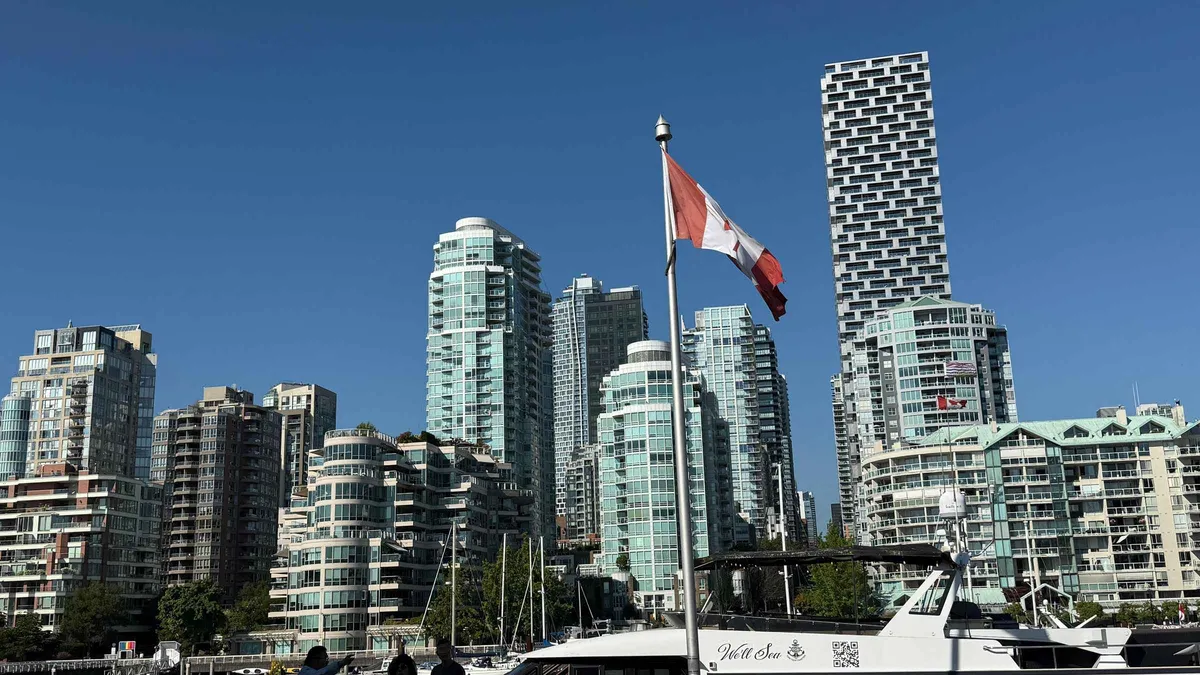
Top rated Vancouver: Hop-On Hop-Off City Tour, SMALL GROUP "12 STOPS"
A hop-on hop-off route run in 15-seat vans rather than buses, with 24, 48 and 72 hour passes and 12 to 17 stops depending on the pass. The driver is not a guide and no attraction tickets are included.
Check Availability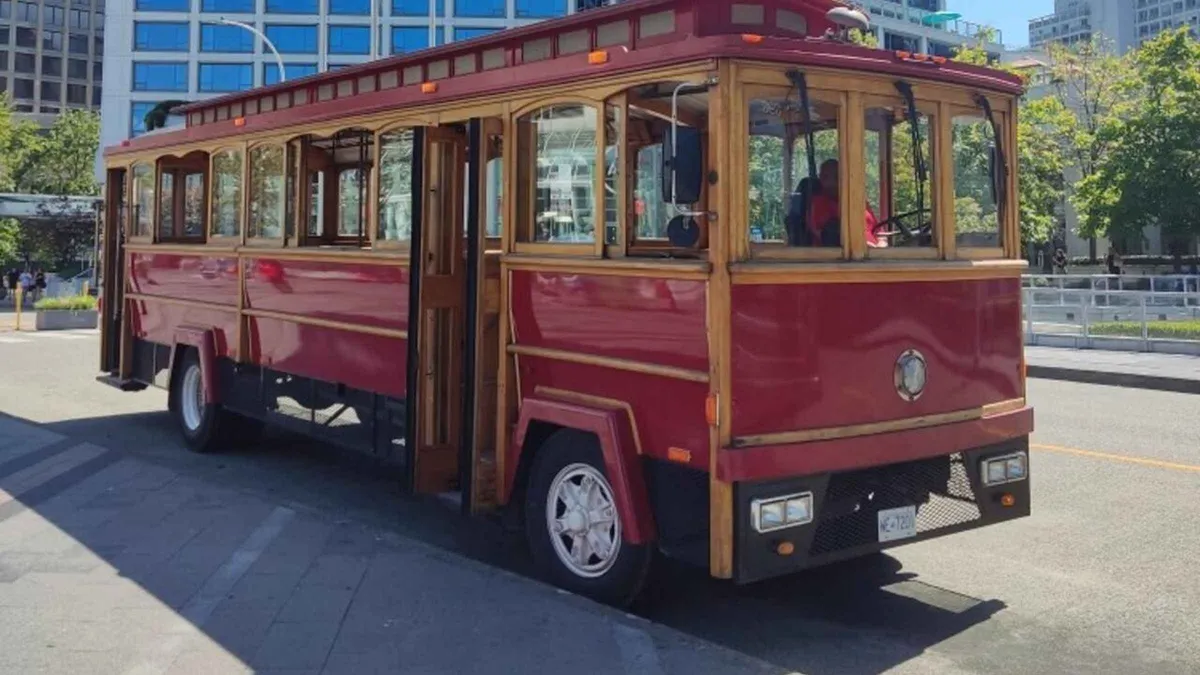 from $45.39
Vancouver: Gray Line Hop-On Hop-Off Trolley Tour Pass
A 24 or 48 hour pass on the San Francisco style trolleys, 19 stops from Canada Place through Stanley Park to Granville Island with live English commentary. Winter frequency drops to one bus every 70 to 90 minutes.
Check Availability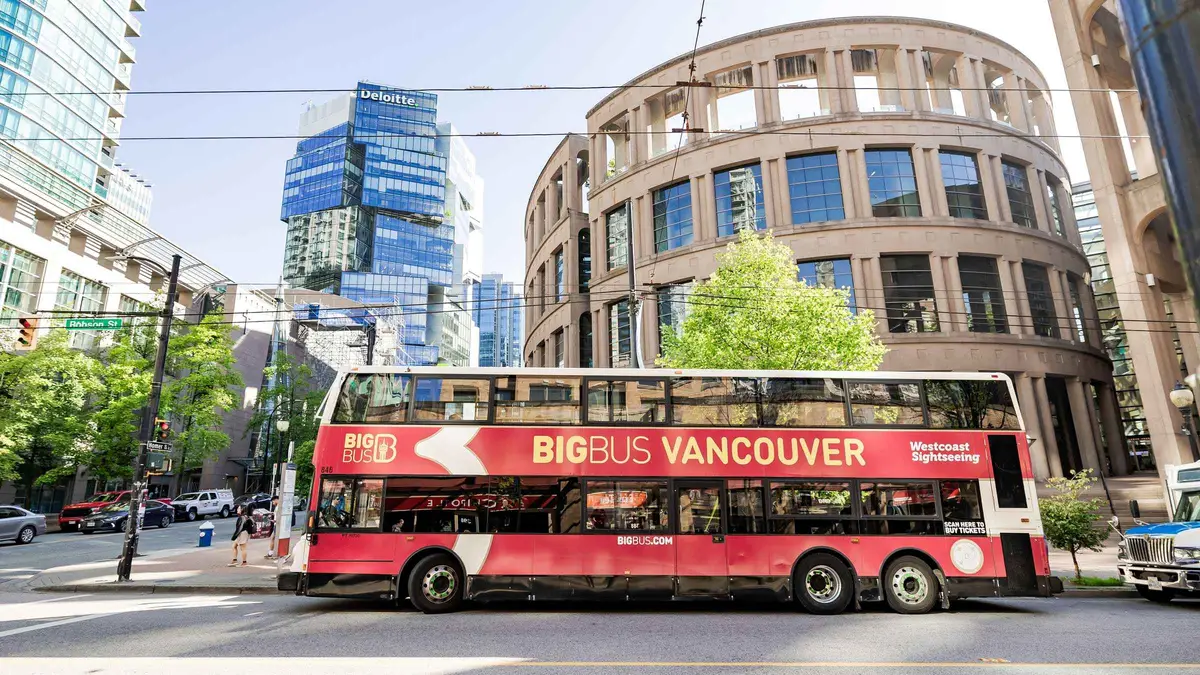 from $52.96
Vancouver: Hop-on Hop-off Tour by Double-Decker Bus
Ten stops on the double-decker route with recorded commentary in seven languages, plus four downloadable audio walking tours of Gastown, Chinatown, Stanley Park and downtown. Ratings on this one sit well below the other city passes.
Check Availability from $75.70
Top rated
from $75.70
Top rated Vancouver: Stanley Park Bicycle Tour
Three hours and 12 flat kilometres through the West End, English Bay and Stanley Park with a guide who stops for the totem poles, Beaver Lake and the forest trails. Bike and helmet are included; e-bike upgrades are in-store only.
Check Availability from $29
Vancouver: YVR Airport Private Transfer to/from Vancouver
A pre-booked private car between YVR and downtown with 60 minutes of free waiting on arrivals and vehicles up to 14 seats. Standard rates cover the city centre only, and addresses outside it carry a surcharge.
Check AvailabilityPrices, ratings and details are the platform's own, checked in Q3 2026; dollar figures are the listed prices — the platform bills in your account's currency.
Vancouver Transit Map: The Six Points A Visitor Actually Uses
Waterfront Station and the five interchanges most sightseeing days pass through, plotted from published addresses. Not a network map: TransLink publishes that, and this is the short list of where you will change.
Where To Go Next
The pages that pick up where a fare table stops.
Airport to downtown Vancouver
The Canada Line, the charge that applies only leaving YVR, the taxi flat fares and the pre-booked transfer. Read the airport page.
The arrival legWhat Vancouver costs
Where fares, parking and admissions sit in a day's spending, and which figures on this site are official rather than estimated. Read the costs page.
The daily totalDay trips from Vancouver
Whistler, Victoria, Squamish and the North Shore mountains, with the coach and ferry fares that decide whether you drive. Read the day trips hub.
The days you leave the cityVancouver accessibility
Station lifts, bus ramps, HandyDART for visitors, and the attractions that publish nothing at all. Read the accessibility page.
Step-free travelVancouver Transit Questions
Do I need a Compass Card, or can I just tap my bank card?
You can tap a contactless bank card, phone or watch at every gate, on every bus and on the SeaBus, and many visitors never buy anything else. The catch is the price: tapping charges the cash fare of CA$3.50 for an adult one-zone trip rather than the stored-value fare of CA$2.85. The CA$6 Compass Card deposit is refundable at Waterfront Station, so the card pays for itself somewhere around the tenth ride. The payment comparison sets the four options side by side.
How much is Vancouver transit for a day, and is the DayPass worth it?
A DayPass is $9.09 (CA$12.55) for an adult and $7.06 (CA$9.75) concession, valid across all zones. Four separate one-zone rides on stored value cost CA$11.40, so the pass wins from the fourth ride and loses on a day with three. Most sightseeing days in this city involve two or three rides and a lot of walking, so buy it only when the plan genuinely moves. The fare table has every figure.
Is the Vancouver SkyTrain running late at night?
The last Canada Line train leaves Waterfront at 1:08 am, the last Expo Line train at 1:16 am and the last Millennium Line train at 1:22 am, with first trains between 4:48 am and 5:30 am. Outside those hours the NightBus network runs, and the N10 in particular covers downtown, Richmond and the airport, which is why the airport page can promise transit at any hour.
Are Vancouver fare zones charged in the evening and at weekends?
No. TransLink charges a one-zone fare on every trip starting after 6:30 pm Monday to Friday, on all weekend travel and on statutory holidays, and buses are one-zone at every hour. In practice a visitor pays two or three zones only on weekday daytime rail and SeaBus trips. The zones section explains what that saves on a SeaBus return.
Do the little ferries across False Creek take a transit fare?
No. The Aquabus and False Creek Ferries are separate private operators with their own fare sheets and their own day passes, and the passes are not interchangeable between them. Adult hops from Granville Island run CA$4 to CA$8.50 depending on the dock, and the all-day passes are CA$22 and CA$20. The ferry table compares both operators dock by dock.
Do I need a car to get around Vancouver?
Not for the city. Downtown, Stanley Park, Granville Island, the beaches and the museums are all on the bus and rail network, and meters run to 10 pm seven days a week. A car earns its keep only on the days you leave town for a mountain, and even then Cypress, Mount Seymour and Whistler all run their own paid coaches. The verdict section names the fares, and the day trips hub has the routes.
Vancouver Transit On Film: Gates, Cards And The Ride
Three walk-throughs that show the parts a fare table cannot: what the gate looks like, how the Compass machine behaves, and what the ride is actually like.
Vancouver SkyTrain: How To's and Riding Tips, Compass Card, History
The clearest walk-through of buying and tapping a Compass Card at a station machine.
Video: Alexander CollegeHow to use the Vancouver SkyTrain without a Compass Card
The contactless route through the gates, which is what most short-stay visitors will do.
Video: TRAVEL TRICKSRiding the Entire Vancouver SkyTrain System: All Stations, All Lines
A full run of the three lines, useful for seeing how far the network reaches before you plan a day.
Video: TransmaniaVideos load from YouTube only when you press play.
Reviewed Q3 2026 (July–September 2026); next review Q4 2026. Prices, hours and terms are set by the venue or operator and confirmed at checkout.
We may earn a commission if you book through one of our links, at no extra cost to you. Full affiliate disclosure