 Vancouver Trip Guide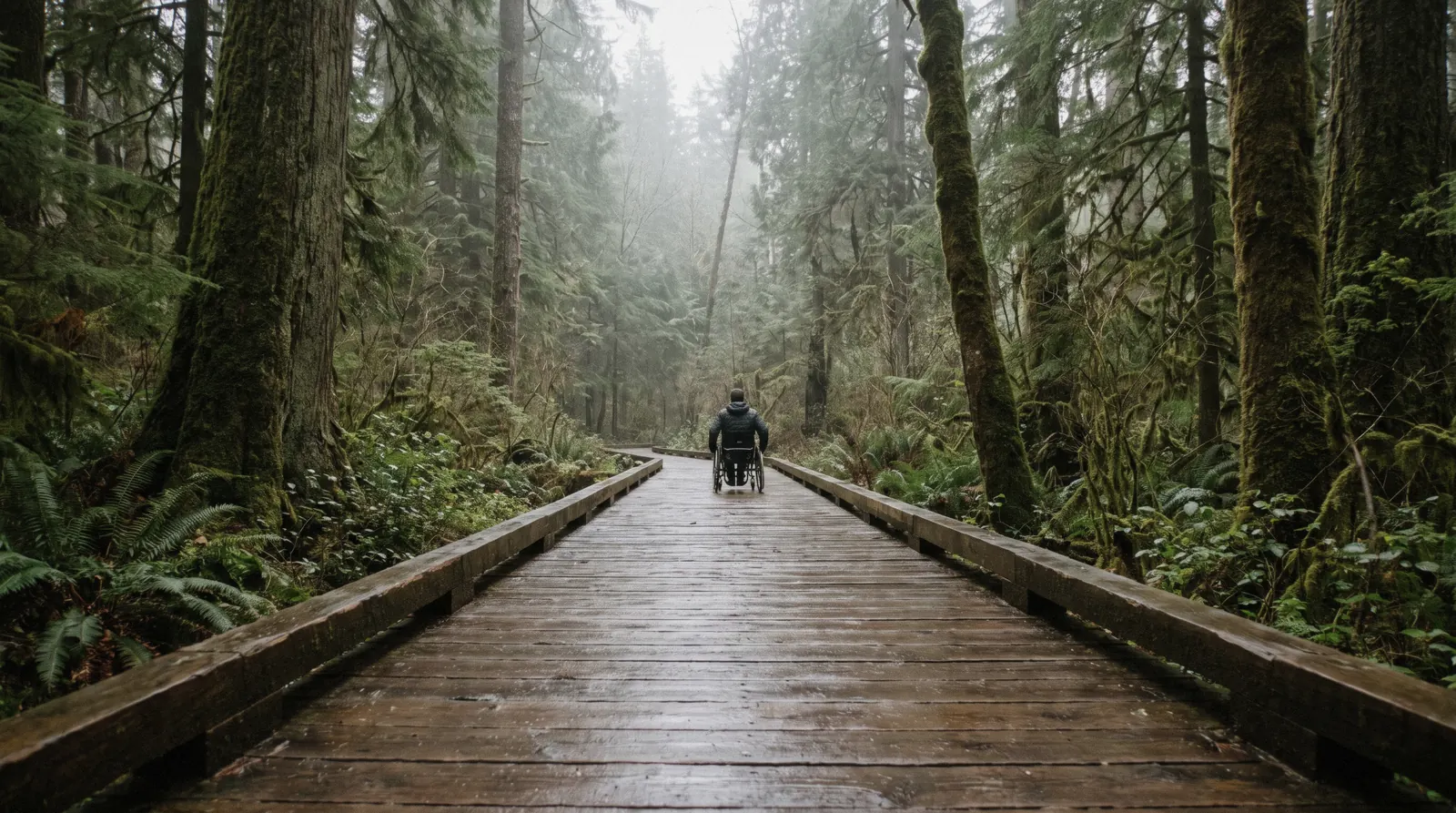
Vancouver Accessibility
Vancouver accessibility is better than most North American cities on the parts a public body controls and patchier on the parts it does not. Every rail station has a lift, the buses have ramps, and the city's best single attraction is a flat paved path 28 kilometres long. Against that, the North Shore's headline attractions are built out of stairs and hanging bridges, and several of them say so plainly. This page prints what each operator publishes, in the operator's own words, and it prints the gaps too. Sources are the transit authority, the City and the venues themselves, read in Q3 2026. The wider fare and route picture is on getting around Vancouver, and the arrival itself is on the airport page.
Quick answer Lifts, ramps, the flat 28 km path, and the four places to skip
Every SkyTrain station in Vancouver has lifts and escalators giving full access from entrance to platform, and the bus fleet is described by the operator as having ramps, low-level boarding, priority seating and modifiable seats. The seawall, the single best thing to do in the city, is 28 kilometres of paved and mainly flat path with a marked wheeling lane. The Capilano Suspension Bridge, its Treetops walk and its Cliffwalk are all inaccessible to wheelchair users, which is why the park admits wheelchair users free. The Grouse Grind, Quarry Rock and the trails at Lynn Canyon are not accessible at all.
Key takeaways
- A visitor who can use ordinary transit needs to arrange nothing: lifts at every station, ramps on every bus, and the airport train is step-free from both terminal levels
- HandyDART is open to visitors through a visitor application form, but it is booked in advance rather than hailed, so it is not an arrival-day option
- Capilano gives wheelchair users complimentary admission because its three headline attractions cannot carry them, and it says so on its own FAQ
- Grouse Mountain is the North Shore mountain that works: the Skyride, chalet, plaza, wildlife refuge and Lumberjack Show are all reachable, and only the summit chairlift is not
- Booking a tour? Very few listings state anything at all, and the ones that do are in the table on this page, including a step-free flying theatre and a gondola with accessible cabins
What Each Attraction Publishes About Access
Read off each venue's own accessibility or FAQ page in Q3 2026. The column that matters most is the last one: several of Vancouver's best-known attractions state their limits clearly, and one turns the limit into a free ticket.
| Place | Step-free arrival | What is reachable | What is not | What it costs |
|---|---|---|---|---|
| The seawall | Yes, at many points along 28 km | Paved, mainly flat, with a marked wheeling lane | Nothing published as excluded | Free |
| Stanley Park | Yes, from the seawall | The Ravine Trail, a wheelchair accessible route to and around Beaver Lake | The forest trails away from the paved routes | Free |
| Capilano Suspension Bridge | Yes, to the entrance side | Story Centre, Kia'palano, shops and restaurants, plus boardwalks in select areas | The Suspension Bridge, Treetops Adventure and Cliffwalk | Complimentary for wheelchair users; otherwise CA$76.95 adult plus tax |
| Grouse Mountain | Yes, via Lot A or the bus lane | Skyride, chalet top floor, mountaintop plaza, wildlife refuge, Owl Talks, Lumberjack Show | The Peak Chairlift, the unpaved summit, and the ziplines | $64.50 (CA$89) adult Mountain Admission |
| Lynn Canyon | To the car park only | The Ecology Centre and the paved approach | The suspension bridge itself: 30 steps, and not accessible by strollers or wheelchairs | Free |
Capilano's page states that Park Rates are subject to GST, so the tax is added at checkout. Grouse does not state whether tax is included. Neither figure is what a wheelchair user pays at Capilano, which is nothing.
Transit: Lifts At Every Station, Ramps On The Buses
The transit network is the strongest part of the picture, and the operator's wording is worth quoting exactly rather than rounding up into a claim it does not make.
TransLink states that elevators and escalators are at all SkyTrain stations, providing full access between the station entrance and platforms, and adds one caveat worth carrying: some stations only have escalators going in one direction. Platforms have tactile wayfinding tiles for passengers with vision impairments. On the bus side the operator lists accessible bus features such as ramps, low-level boarding, priority seating and modifiable seats.
What TransLink does not publish anywhere we could find is a sentence saying every bus in the fleet is accessible. We are not going to write one on its behalf. The honest formulation is that ramps and low-floor boarding run across the bus fleet, which is what the operator's own accessibility page describes, and that station-level access alerts are posted separately when a lift is out of service.
The airport arrival is step-free in both directions. YVR-Airport station has lift access from both the arrivals and the departures levels, and Guest Experience staff in blue and green vests are stationed to assist. That makes the train the easiest accessible transfer into the city, and it costs $8.40 (CA$11.60) tapping a bank card with the airport surcharge included.
Courtesy hotel shuttles are a different matter: the airport states that a number of them can accommodate wheelchairs and mobility aids and that you should contact the operator directly to arrange it, which means arranging, not turning up. The whole transfer comparison sits on the airport to downtown page.
The one thing to check before you travel
Lifts break. TransLink posts station access alerts separately from its accessibility page, and a station with one lift and one direction of escalator becomes a station with stairs when that lift is down. On a route with a connection, check the alert page the morning you travel rather than the night before.
HandyDART: Open To Visitors, But Not On The Day
The door-to-door service exists, visitors can use it, and the timing is the thing nobody mentions until it is too late.
HandyDART is the transit authority's door-to-door, shared-ride service for people who are unable to navigate conventional public transit without assistance. Eligibility is for people with a physical, sensory or cognitive disability who cannot use conventional public transit for all trips without help, and the detailed criteria sit inside the application form rather than on the page. Out-of-region visitors are explicitly catered for: there is a HandyDART Visitor Application Form, so this is not a residents-only service.
The catch is processing time. TransLink states it will process a HandyDART application within 10 days of confirming receipt, and a HandyCard takes four to six weeks. That makes HandyDART something you arrange before you fly, not something you fall back on when a lift is out at the station. The planning contact is Access Transit Planning, on access.transit@translink.ca or 778.375.7665.
| HandyDART fare | Cash | Stored value | Monthly pass | Note |
|---|---|---|---|---|
| Adult 19 to 64 | $2.54 (CA$3.50) | $2.06 (CA$2.85) | $84.90 (CA$117.20) | Charged as a one-zone fare wherever it goes |
| Concession, 13 to 18 and 65+ | $1.67 (CA$2.30) | $1.67 (CA$2.30) | $48.50 (CA$66.95) | The concession rate is identical either way you pay |
Those fares took effect on 1 July 2026, when the network's fares rose an average of 5%. The important structural point is that every HandyDART trip is charged as a one-zone fare, the same price as a bus, a SeaBus or a SkyTrain ride, however far across the region it travels. A door-to-door ride from downtown to the far side of Burnaby costs $2.06 (CA$2.85) on stored value.
That is unusual, and it is the reason the service is worth the paperwork if your trip is long enough to need it.
The Seawall: The Best Thing To Do Here, And It Is Flat
Most cities ask a wheelchair user to settle for a lesser version of the headline attraction. Vancouver's headline attraction is a paved path at sea level.
The City describes it in its own words as the world's longest uninterrupted waterfront path: a 28 kilometre seaside greenway, including the Stanley Park section, running from the Vancouver Convention Centre to Spanish Banks Park. It is divided into two clearly marked sections, one for walkers and joggers closest to the water and one for cyclists and inline skaters on the inside path. The City describes the surface as paved and mainly flat and as wheelchair accessible. That last phrase reached our research through a search summary of vancouver.ca rather than a sentence we could re-read on the rendered page, so we are attributing it at one remove rather than quoting it as gospel; the paving and the gradient are observable from the City's own maps either way.
How walkable Vancouver is depends entirely on which part of it you mean: the downtown peninsula and the whole waterfront are flat, gridded and continuously paved, and the mountains that make the postcard start on the other side of the water. The lane discipline matters more than it sounds. The water-side lane carries walking and wheeling; the inside lane carries bikes moving at speed, often commuters rather than tourists. Staying on the water side is not a courtesy, it is a safety decision.
Inside Stanley Park there is one signposted accessible route off the waterfront. In the City's wording, the Ravine Trail provides a wheelchair accessible route from the Seawall, where Beaver Creek flows into Burrard Inlet, along the creek up to and around Beaver Lake on Beaver Lake Trail. That is the only forest trail in the park the City names as accessible, and it is a genuinely different experience from the seawall: cedar shade and creek noise rather than open water.
The City also publishes a Stanley Park map and guide as a PDF that marks walking, cycling and wheelchair trails together with washrooms and shuttle stops. It is the single most useful accessibility document the City produces for a visitor, and it is free. More on the park itself is on the Stanley Park page and the seawall page.
The North Shore: One Mountain Works, The Other Does Not
The two attractions every visitor is sold sit ten minutes apart and take opposite positions on access. Both are honest about it, which is more than most.
Capilano states it plainly on its own FAQ: the Suspension Bridge, Treetops Adventure and Cliffwalk are not wheelchair accessible. Those are the three things the park is famous for. What remains accessible is the Story Centre, Kia'palano, the shops and the restaurants, with wheelchair and mobility-accessible paths on boardwalks and select areas. And then the decision that deserves credit: guests using wheelchairs or mobility aids receive complimentary admission. The park charges nothing rather than charging CA$76.95 for a park whose headline attractions it cannot give you. There is a second provision too, for Access2 cardholders: the cardholder buys a ticket or annual pass online and the support person receives complimentary admission on presentation of a valid Access2 card and a timed ticket.
That is the single most important accessibility fact about any Vancouver attraction, and it cuts both ways. If crossing the bridge is the point of the visit, Capilano is not the day out. If the canyon, the First Nations carvings and the forest are the point, it costs nothing to find out.
Grouse Mountain is the North Shore attraction that does work, and its accessibility page is unusually specific. Wheelchair users are directed to the upper parking lot, Lot A, which has designated stalls in the first row nearest the Skyride and the access ramps; arrivals by bus come along the bus lane, around Guest Services and into Lot A. A covered walkway links the Peak Skyride station to the top floor of the Chalet, giving access to Altitudes Bistro, The Observatory, the Timber Room and wheelchair accessible washrooms. A paved outdoor ramp descends to the mountaintop plaza and the paved paths to the Refuge for Endangered Wildlife, Owl Talks and the Lumberjack Show.
The limits are equally specific. The Peak Chairlift cannot accommodate wheelchair users and there are no paved pathways at the summit, though peak access can be arranged by special request through Alpine Guest Services. There are no lifts inside the Chalet. The ziplines cannot take wheelchair users. Service dogs must be registered at Guest Services and cannot visit the Grizzly Bear Habitat or Owl Talks. In winter the transfer between the Skyride terminal and the Chalet's main floor is a snow-covered ramp, and the mountain offers assistance rather than pretending the problem does not exist. A complimentary Peak Shuttle moves guests with mobility needs between the mountaintop attractions.
Lynn Canyon, the free alternative that this site recommends over Capilano on price, is the one place where the free option is the less accessible one. The Ecology Centre states that the suspension bridge is about two minutes from the main parking lot and is not accessible by strollers or wheelchairs, because there are 30 steps. The canyon trails below it are steeper still. The Lynn Canyon page has the rest, but for a wheelchair user the honest ranking on the North Shore is Grouse first, Capilano second and free, Lynn Canyon not at all.
What Is Not Accessible, Said Plainly
A list of things to leave off the plan is worth more than a list of things to try. These are the ones where the operator's own description rules it out.
None of the following is a judgement call. Each one is ruled out by a published figure or a published sentence.
- The Grouse Grind: 2.5 kilometres, 800 metres of elevation gain, 2,830 stairs, uphill only because downhill hiking is not permitted. Descending means the gondola, and a download ticket is CA$20 for anyone 13 and over, CA$10 for a child, unless you hold a Mountain Admission
- Quarry Rock at Deep Cove: A forest trail with stairs and boardwalks. The District of North Vancouver publishes no length or elevation figure for it at all, on any of its trail, neighbourhood or notice pages, which tells you how far it is from being a signposted accessible route
- Most of Lynn Canyon's trails: The suspension bridge alone has 30 steps and is stated as not accessible by strollers or wheelchairs; the loop trails below drop into the canyon
- The Capilano bridge, Treetops and Cliffwalk: Stated by the park itself, which is why the admission is free instead
- Grouse's Peak Chairlift and summit: No wheelchair access on the lift, no paved paths at the top, though special arrangements can be requested
The pattern is geographic rather than institutional. Everything at sea level in Vancouver tends to work: the seawall, the beaches, the downtown grid, the museums, the terminal buildings. Everything that climbs the North Shore tends not to, because the attraction itself is the climb.
Planning around that single line will get an accessible trip right more reliably than any list of venue policies.
Accessible Washrooms, And The Register That Does Not Exist
This is the question every accessible-travel guide answers confidently and nobody sources. Here is what is actually published.
Two venues in our research publish an unambiguous statement about accessible washrooms. Canada Place says there are accessible washrooms on all levels of the facility, that most of the facility is located at ground level, and that the parkade has accessible parking stalls available. Grouse Mountain names wheelchair accessible washrooms on the top floor of the Chalet, reached by the covered walkway from the Skyride.
Beyond that, we found no citywide register of accessible public washrooms published by the City of Vancouver or by any regional body, and we are not going to compile one from third-party apps and present it as official. What the City does publish, and what genuinely helps, is the Stanley Park map and guide, which marks washrooms alongside the wheelchair trails. For the rest of the city the practical answer is the same one residents use: shopping centres, transit interchanges, hotel lobbies and the larger museums.
One related fact worth carrying, because it affects a long day outdoors more than most people expect: the City's open-data set records 278 public drinking fountains, of which roughly 41 are flagged year-round and the large majority run seasonally. That matters on the seawall in October, when the taps you passed in July have been disconnected. The detail, and the reason the water is worth drinking, is on the tap water page.
What Tour Listings Actually State About Access
We read the accessibility field on all 54 tour listings this site carries. The finding is that most say nothing, and the ones that speak are worth reading before booking. Figures below are the operators' own listings in US dollars, read in Q3 2026.
A blank accessibility field is not a promise and it is not a refusal; it is an operator who has not filled in the box. Treat it as unknown and ask. The listings that do state something break into three groups: step-free experiences, vehicles that carry a chair on conditions, and activities that rule mobility impairments out entirely.
| Booking | What the listing states | Price | Read it as |
|---|---|---|---|
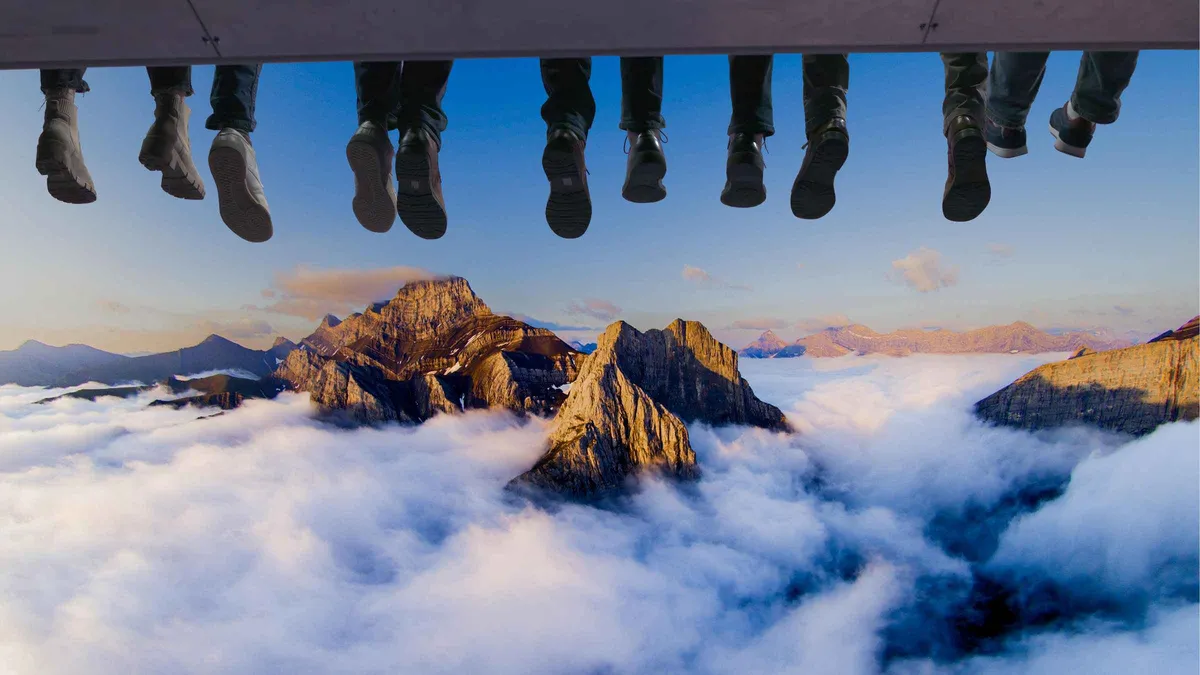
| Flying theatre at Canada Place | Step-free throughout, but riders must transfer to the seat themselves or with a companion, otherwise the ride runs from a stationary platform | $22.09 | Usable either way, and the stationary option is stated rather than improvised |
| Vancouver Aquarium entry | Elevators and ramps throughout; wagons, large or double strollers and ride-on scooters are not permitted | $37.73 | Accessible, but a mobility scooter is explicitly excluded |
| Sea to Sky Gondola ticket | Cabins are wheelchair and stroller accessible | $56.34 | The one mountain gondola outside the city that states it outright |
| Double-decker hop-on hop-off | Wheelchairs, walkers and strollers carried on a first-come, first-served basis | $52.96 | Possible, but not a reservation you can hold |
| Lunch and brunch harbour cruise, listed separately | Tell the operator in advance about wheelchairs, walkers or mobility needs | $137.12 | An arrangement, so book by phone or message rather than blind |
The refusals are equally clear and equally useful. The Capilano tickets and the combination tours that include it state that they are not suitable for wheelchair users or people with mobility impairments, which is the same fact the park publishes. All four seaplane flights require passengers to board and deplane unaided or with minimal assistance. The Stanley Park bike and e-bike tours are ruled out by the bicycle rather than the route, and the ferry-and-coach day trip to Victoria states that collapsible chairs are carried only if the passenger can manage five to ten steps or travels with a companion.
If your day depends on it, the accessible version of a Vancouver tour is usually the boat or the bus rather than the bike or the plane, and the harbour cruise is the shortest of them at one hour.
The Legal Backdrop, Briefly
A visitor does not need to know the legislation, but it explains why the published information exists at all and why it keeps improving.
British Columbia has accessibility legislation of its own: the Accessible British Columbia Act, cited as SBC 2021 chapter 19, assented to on 17 June 2021. It is the framework under which provincial organisations are required to work on identifying and removing barriers, and it is the reason a transit authority now publishes an accessibility page with wording specific enough to quote.
We could not retrieve the City of Vancouver's own accessibility strategy page by automated request in Q3 2026, so this page carries nothing from it. That is a gap in our sourcing rather than a gap in the City's work, and we would rather name it than paraphrase a document we have not read. Everything else on this page comes from a transit, park or venue page we did read. How this fits the whole visit is on our Vancouver travel guide.
The Bookings That State Their Access
Five listings that answer the question rather than leaving the field blank, from step-free indoors to a gondola cabin that takes a chair. Operator listings in US dollars, read in Q3 2026.
 from $22.09
Vancouver: Flyover Flying Theatre Experience
A 30 minute flying theatre at Canada Place: a pre-show, then a motion seat in front of a 52 foot spherical screen with wind, mist and scent effects. Not for anyone with heart trouble or a fear of heights.
Check Availability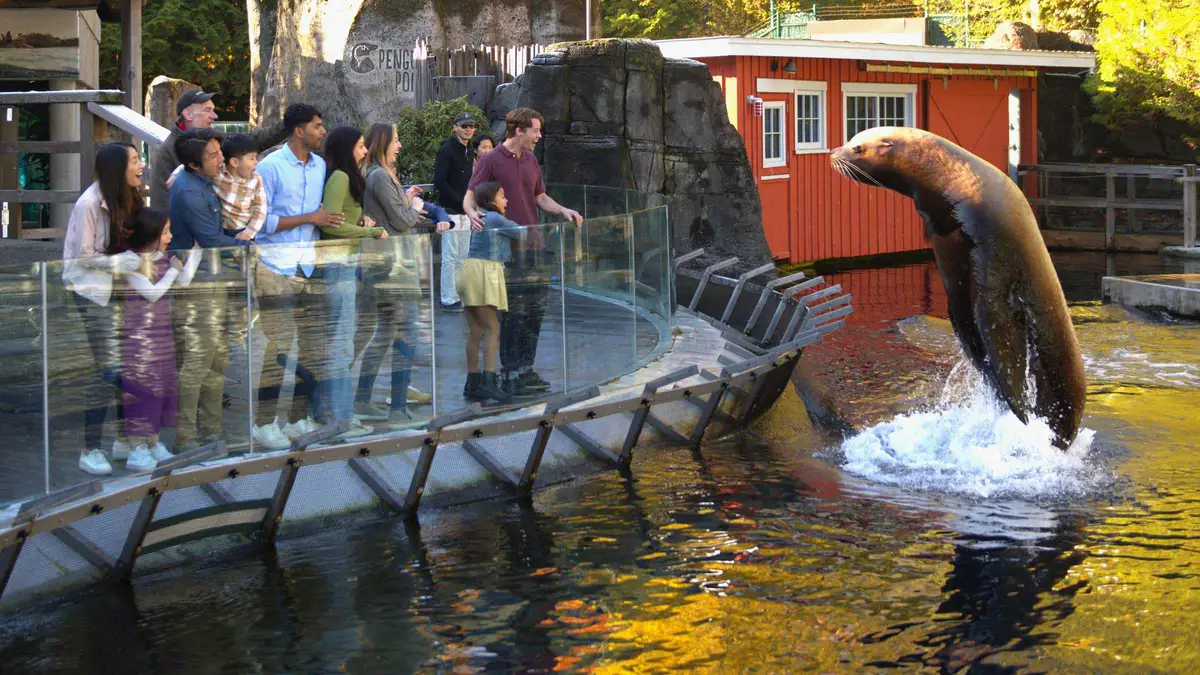 from $37.73
Vancouver Aquarium: Skip-the-Line Ticket
Skip-the-ticket-line entry to the aquarium in Stanley Park, with the 4D theatre and Wet Lab included and animal encounters charged separately. Two to four hours covers the galleries, and the site is cashless.
Check Availability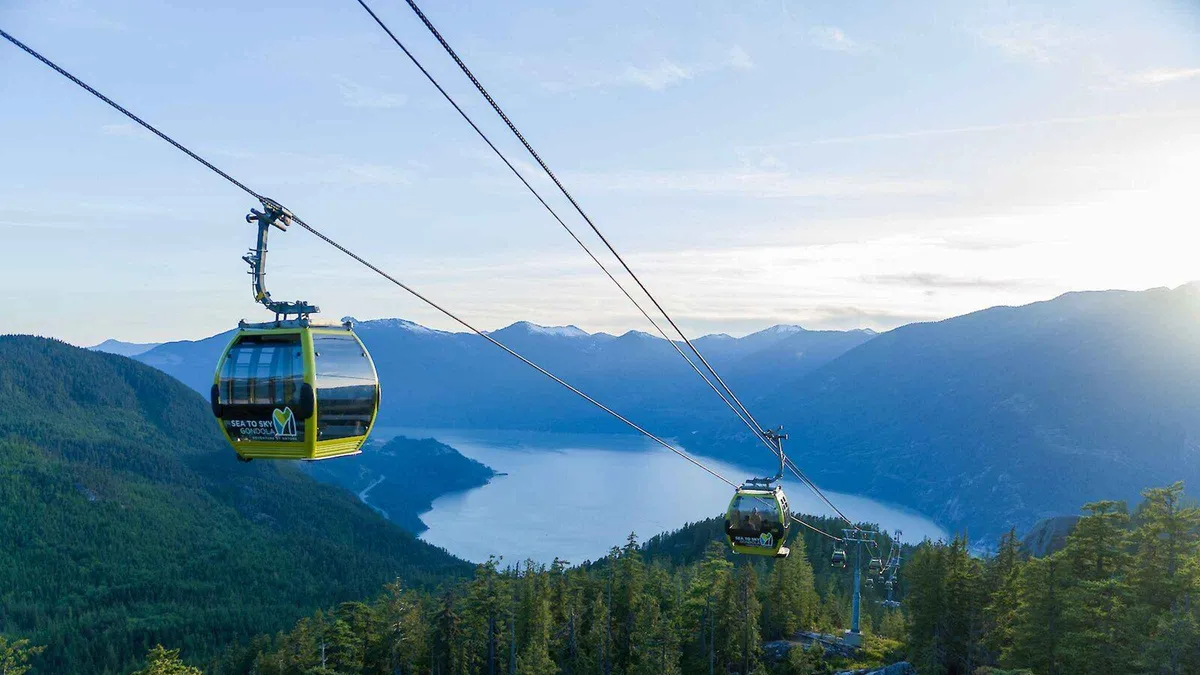 from $56.34
Top rated
from $56.34
Top rated Squamish: Sea to Sky Gondola Admission Ticket
The attraction's own ticket, without a tour attached: a return ride to 885 metres above Howe Sound, the Sky Pilot Suspension Bridge and two interpretive loop trails at the top. Cabins are step-free and hold eight.
Check Availability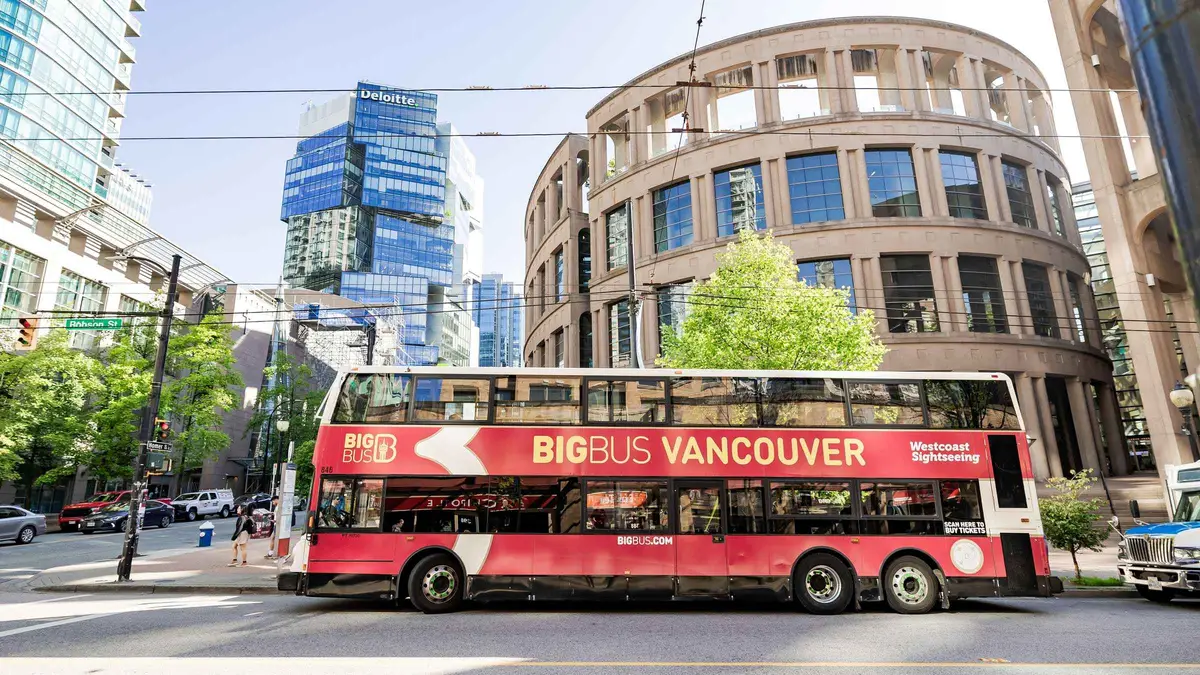 from $52.96
Vancouver: Hop-on Hop-off Tour by Double-Decker Bus
Ten stops on the double-decker route with recorded commentary in seven languages, plus four downloadable audio walking tours of Gastown, Chinatown, Stanley Park and downtown. Ratings on this one sit well below the other city passes.
Check Availability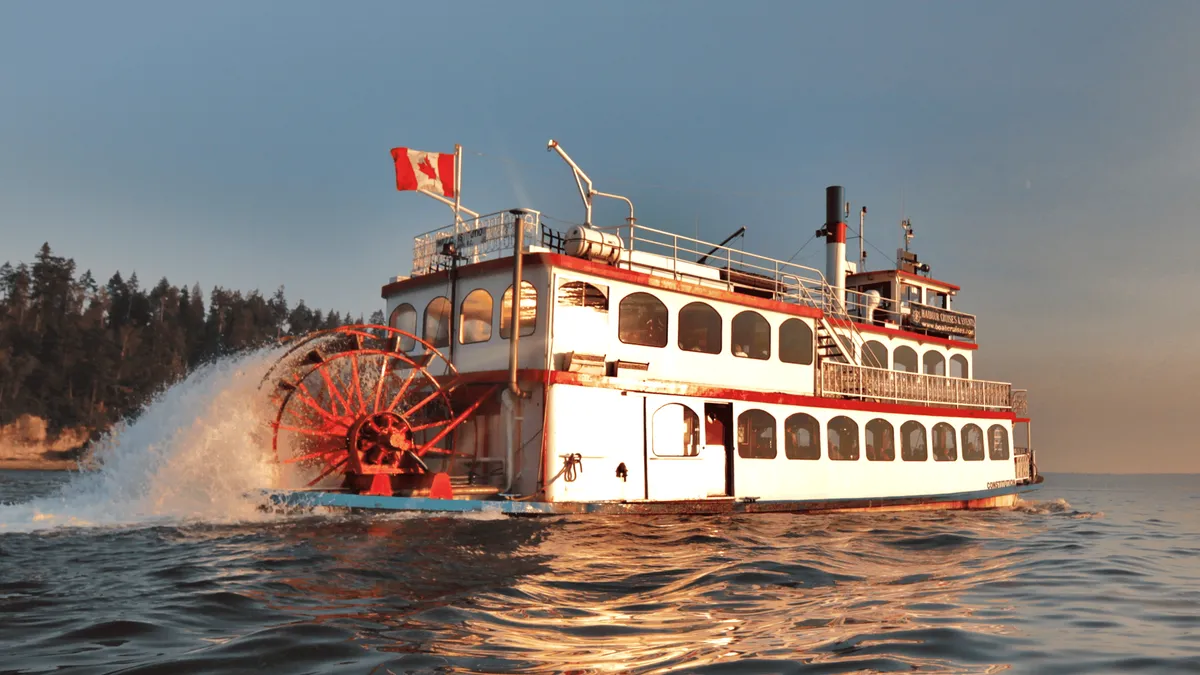 from $53.69
Vancouver: Harbor Sightseeing Cruise
One narrated hour around the inner harbour, past Stanley Park and under the Lions Gate Bridge, with open-air decks and a licensed bar on board. The shortest and cheapest way to see the city from the water.
Check AvailabilityPrices, ratings and details are the platform's own, checked in Q3 2026; dollar figures are the listed prices — the platform bills in your account's currency.
Step-Free Vancouver: The Points That Work
The places on this page that publish accessible arrival or accessible facilities, plotted from their own addresses, with the two North Shore attractions marked for the difference between them.
Positions from the venues' published addresses, read in Q3 2026.
Where To Go Next
The pages that carry the rest of the practical layer.
Getting around Vancouver
Fares, zones, the SeaBus, and the rule that makes everything a one-zone fare after 6:30 pm. Read the transit page.
The networkYVR to downtown Vancouver
Step-free lift access from both terminal levels, the taxi zone fares, and the shuttles that carry mobility aids by arrangement. Read the airport page.
The arrivalThings to do in Vancouver
The full attraction list, most of which sits at sea level and works. Read the hub.
The rest of the listVancouver tap water
278 public fountains, roughly 41 of them year-round, and why the bottled aisle is a waste of money here. Read the tap water page.
A long day outdoorsVancouver Accessibility Questions
Is Vancouver wheelchair accessible for a visitor?
At sea level, yes. Every SkyTrain station has lifts giving full access from entrance to platform, the buses have ramps and low-floor boarding, and the seawall is 28 kilometres of paved, mainly flat path with a marked wheeling lane. The exceptions are the North Shore climbs, and they are listed in what is not accessible.
Can visitors use HandyDART in Vancouver?
Yes, through a HandyDART Visitor Application Form, but not at short notice: TransLink states applications are processed within 10 days of confirming receipt. Every trip is charged as a one-zone fare, $2.06 (CA$2.85) on stored value. The HandyDART section has the fare table and the planning contact.
Is the Capilano Suspension Bridge accessible?
No. The park states that the Suspension Bridge, Treetops Adventure and Cliffwalk are all not wheelchair accessible, and it admits wheelchair users free as a result. The Story Centre, Kia'palano, shops and restaurants remain reachable. The North Shore section covers it, and the Capilano page covers the park itself.
Which Vancouver mountain works for a wheelchair user?
Grouse. The Skyride, the top floor of the Chalet, the mountaintop plaza, the wildlife refuge, Owl Talks and the Lumberjack Show are all reachable on paved routes, with a complimentary Peak Shuttle between them; only the Peak Chairlift and the unpaved summit are not. Admission is $64.50 (CA$89) adult, and the Grouse Mountain page has the detail.
Are there accessible washrooms in Vancouver's tourist areas?
Canada Place publishes accessible washrooms on all levels, and Grouse names them on the Chalet's top floor. We found no citywide accessible-washroom register published by the City, so anything presented as an official list is somebody's compilation. The washrooms section explains what the City does publish instead.
Do Vancouver tours say whether they are wheelchair accessible?
Most do not fill the field in at all. The ones that do are in the tour access table: a step-free flying theatre, an aquarium with lifts and ramps, a gondola with accessible cabins and a hop-on bus that carries a chair on a first-come basis. A blank field means unknown, so ask before booking.
Accessible Vancouver On Film
Three that show the surfaces rather than describe them: a disabled traveller's route through the city, the SeaBus crossing from a wheelchair, and the accessible transport laid on for an adaptive sailing event.
How To Explore Vancouver: A Disabled Traveler's Guide
A first-person route through the downtown and waterfront sections covered on this page.
Video: Factory mmaWheelchair Accessible Ride on Seabus - Vancouver to North Vancouver
The 12-minute crossing filmed from a chair, ramp to ramp.
Video: Traveling with a chairMobility Cup 2026: Accessible Transportation from YVR Airport to Vancouver & UBC
How accessible transfers from the airport are actually organised, filmed this year.
Video: Disability FoundationVideos load from YouTube only when you press play.
Reviewed Q3 2026 (July–September 2026); next review Q4 2026. Prices, hours and terms are set by the venue or operator and confirmed at checkout.
We may earn a commission if you book through one of our links, at no extra cost to you. Full affiliate disclosure