 Vancouver Trip Guide
The Great Vancouver Fire: The Hour the City Burned
Last reviewed 2026-09-08
The Great Vancouver Fire is the reason almost nothing in this city is older than 1887, and it is the strangest founding story any Canadian city has. On Sunday 13 June 1886, ten weeks after the township of Granville had been incorporated as the City of Vancouver, two land-clearing fires west of town got away in a wind and destroyed the place. The whole event lasted less than an hour and possibly less than half of one, and the sources have never agreed on how many people died in it. This page sets out what happened, prints the contested figures as contested with the name of whoever states each one, and ends where a visitor can actually stand today, in Gastown and on the shore the survivors ran to.
Quick answer What happened, what is disputed, and the three places you can still see it
Two fires lit to clear land, one for the Canadian Pacific Railway roundhouse and one to extend the city westward, joined in a gale on the afternoon of 13 June 1886 and burned Vancouver to the ground. Between 600 and 1,000 buildings went. Two or three structures survived. Squamish people paddled across Burrard Inlet in canoes and pulled survivors out of the water, an act the City did not formally acknowledge until 2017. The death toll is unknown and has been reported as anything from 5 to 50.
Key takeaways
- The city was ten weeks old: Granville was incorporated as the City of Vancouver on 6 April 1886, and its volunteer fire company had held its first meeting on 28 May, sixteen days before it burned
- How long it took is itself disputed: under an hour, less than 45 minutes and less than 30 minutes are all in print, from three different sources
- Mayor Malcolm MacLean's telegram to the Prime Minister read: "Our city is ashes three thousand people homeless can you send us any government aid?"
- What survived is why Gastown looks the way it does: everything you see there was built after the fire, most of it in brick
- Walk it with a Gastown historical walking tour, or take the downtown history and culture walk that covers the same ground on foot
What Was There To Burn
The place had existed for about twenty years and had been a city for ten weeks. European settlement of the Burrard Inlet began in the 1860s around two sawmills: Moodyville on the north shore, opened in 1863, and Hastings Mill on the south shore, opened in 1867. The settlement of Granville grew between them as shops and hotels serving mill workers, and in the early 1880s the two mills employed between 150 and 200 men, not counting loggers and longshoremen. Exact numbers are unknown, because a large share of the workforce was transient and unmarried and moved on after a few weeks.
The Musqueam, Squamish and Tsleil-Waututh had been on the inlet for thousands of years before any of that. Squamish men were hired as unskilled labour when milling began in 1863, and by 1881 there were at least 500 Squamish people at Burrard Inlet. They were not given the same rights as their European contemporaries: the mills did not hire them into skilled or better-paid roles, and Indigenous women could not inherit property from white partners and were frequently ejected from their homes when those men died. That is the context in which what happened on 13 June should be read.
In 1885 it was announced that Granville would be the western terminus of the Canadian Pacific Railway, and everything accelerated. The township was incorporated as the City of Vancouver on 6 April 1886, the fourth city in British Columbia. Malcolm MacLean was elected mayor at the first council election on 3 May. The Vancouver Volunteer Hose Company No. 1 held its inaugural meeting on 28 May. Three newspapers had been founded that year. The city had ordered a steam pumper fire engine and it had not arrived.
What the city was called before it was Vancouver
Granville, officially, from the mid-1860s, and Gastown colloquially, after John Deighton, the saloon keeper who put up the first bar at what is now Maple Tree Square. Both names outlived the fire: the neighbourhood is still called Gastown and Granville survives as the name of a street, a bridge and an island. The city took the name Vancouver only at incorporation in April 1886, which is why it is accurate and slightly absurd to say that Vancouver burned down in the same season it was named.
Sunday 13 June 1886
There had been three weeks of abnormal heat for late spring. Sunday was hotter still, with an offshore breeze coming in off the Pacific, and the ground east and west of the town was covered in forest deadfall and fresh clearing debris.
Two fires were burning that morning, both deliberately. The first was to the south-west, clearing land for the CPR's roundhouse at the new terminus. The second was at the west end of the city near Cambie and Cordova, clearing ground so the city could be extended westward into the blocks the railway's land commissioner had already marked out. Both had grown beyond their crews' control by early afternoon.
The men fought them with what a town of that size had: buckets, wet blankets and shovels. Water for the first fire came from False Creek; for the second, from the hand pump at the newly built Regina Hotel. Then the breeze turned to a gale. The crew on the first fire abandoned it and ran for the False Creek shore. On the second, an attempt to cut a firebreak with pickaxes failed, and when the two fire fronts met, that one was abandoned too.
What happened next was fast enough that the accounts of it are about speed rather than sequence. The Vancouver Daily News, four days later, opened its two-page report with: "Probably never since the days of Pompeii and Herculaneum was a town wiped out of existence so completely and suddenly as was Vancouver." One eyewitness, quoted in the province's own public-history project, put it more usefully: "Vancouver didn't burn. It exploded." Buildings caught as the sap in green lumber reached ignition point, and burning embers travelled ahead on the wind. Eyewitnesses said the flames took the wooden sidewalks faster than a man could run.
The people who did not believe it
Not everyone ran. Some residents saw the smoke, heard the warnings, and decided the fire was not dangerous. Some waited until the last minute. Some went to the hotels to drink the liquor nobody was guarding any more. The Squamish from the south-shore village of Snauq paddled across to look at it.
What most people did was head for the water. At the Burrard Inlet shore they got onto floats and boats; at least two hundred found refuge aboard the Robert Kerr, a 58-metre wooden ship at anchor close in, which has been remembered ever since as the ship that saved Vancouver. Others could only tread water, holding possessions above their heads and keeping their faces close to the surface for air. A woman waded out holding a sewing machine, the only thing she had saved. Two businessmen survived by pushing their faces into the gravel. A mother and son were found dead at the bottom of a well, one of several people who climbed into wells for shelter and suffocated there.
Meanwhile the volunteer hose company did the single most consequential thing anyone did that day, which was not firefighting: they cleared the explosives out of Scoullar's General Store and carried them to the Hastings Mill at the far end of town. The city clerk, Thomas McGuian, saved the city's records, all ten weeks of them, by handing them to a stranger.
The Canoes From the North Shore
From the village of Ustlawn on the north shore, Squamish people saw the smoke and launched. Agnes Lacket Joe took a dugout canoe across the inlet toward the people in the water, and others followed her. As they paddled they sang. When the canoes were full they took the survivors back to the village at Eslhá7an, opened their homes and the church to them, and went back for more.
The song they sang is still part of Squamish oral tradition and is sung at ceremonies and funerals; it is known as the Paddle Song. Kristen Rivers, a descendant of one of the women who led the rescue, told CBC that oral tradition holds that dozens of canoes came over and that her great-great-grandmother led the way. Some of the people they rescued stayed on the North Shore, and the friendships lasted: descendants describe families breaking bread with Agnes and the other rescuers on holidays for years afterwards.
The Vancouver Heritage Foundation's own account is blunt about the arithmetic: many of the people who had jumped into the inlet would have died without the Squamish. It took the City of Vancouver until June 2017 to formally recognise those first responders, in a motion brought by Councillor Andrea Reimer, and a Paddle Song event was held at the Hastings Mill Store the following June with Marissa Nahanee of the Squamish Nation performing it. One hundred and thirty-one years is a long time to leave that unsaid.
Vancouver sits on the unceded territories of the xʷməθkʷəy̓əm (Musqueam), Sḵwx̱wú7mesh (Squamish) and səlilwətaɬ (Tsleil-Waututh) Nations. On 13 June 1886 that was not an acknowledgement at the top of a document. It was the reason there were canoes.
The Figures That Do Not Agree
Almost every number attached to this fire is contested, and the disagreements are not small. Each row names who states the figure, from the sources listed at the foot of this page and read in Q3 2026.
| What | The figure | Who states it |
|---|---|---|
| How long it took | Under an hour | British Columbia: An Untold History, the province's public-history project |
| How long it took | Less than 45 minutes, "some say" less | Gastown Business Improvement Society, quoting Chuck Davis's Greater Vancouver Book |
| How long it took | Less than thirty minutes | Vancouver Heritage Foundation, Places That Matter |
| How long it took | "In 20 minutes, Vancouver had been wiped off the earth. In 12 hours, it was rising again" | Chuck Davis, quoted by the province's public-history project |
| The dead | At least 21 bodies or parts thereof found immediately after, more during the cleanup | Alderman Gallagher, a witness, via Robert McDonald's Making Vancouver |
| The dead | Some 28 | On This Spot, drawing on Lisa Smith's Vancouver is Ashes |
| The dead | Dozens, exact number unknown | Vancouver Heritage Foundation and the province's public-history project |
| The dead | 5 · 12 · 50, in three different papers within three days | Quebec Daily Telegraph and Toronto World; The Day of New London, Connecticut, headlined "50 Lives Lost" |
| Buildings destroyed | Between 600 and 1,000, exact number unknown | Lisa Smith, Vancouver is Ashes |
| Buildings left standing | About three, including the Hastings Mill Store | Vancouver Heritage Foundation; the Regina Hotel and the Bridge Hotel are the two named survivors in McDonald |
| Property loss | About one million dollars | Quebec Daily Telegraph, 15 June 1886 |
Why the death toll cannot be settled: the population was changing week by week as the railway arrived, and a large share of the mill workforce was transient and unmarried, so there was no reliable list of who was in town on the Sunday. A side building of the Bridge Hotel served as the morgue. Treat any page that gives you one confident number without a source as fiction.
Twelve Hours Later
MacLean sent two telegrams, carried by horse to New Westminster because Vancouver no longer had a telegraph office. The one to Prime Minister Sir John A. Macdonald read: "Our city is ashes three thousand people homeless can you send us any government aid?" The other went to the Mayor of Toronto, who promised immediate help. Word came back that New Westminster was already loading wagons.
Most survivors had gathered at Hastings Mill or on False Creek. MacLean directed them to the Westminster Bridge to wait for the relief, and an improvised camp went up with tents and lean-tos made from branches. Supplies from New Westminster and Port Moody arrived around midnight. Money came later from the federal and provincial governments and from towns near and far, Toronto and Seattle among them.
The rebuilding started before the ground was cool. The day after the fire, Richard Alexander, manager of the Hastings Mill, announced free lumber for anyone rebuilding a home or a business. Blocks of ice found under the wreckage of the Deighton House ice shed gave people drinking water. The council set up a tent city hall, and MacLean appointed three special constables, Jackson Abray, V. W. Haywood and John McLaren, to join constable John Stewart: that was the founding of the Vancouver Police Department, created on the day after the fire to stop looting.
Within two weeks, Cordova Street from Carrall to Abbott was full of businesses trading again out of basic structures. Within six months, 500 buildings had been rebuilt, many of them in brick this time. The steam pumper the city had already bought arrived two months after it was needed. Vancouver's population went from several hundred to 2,000 within a year and 13,000 within six.
One claim that has never been verified
In June 1938 the Montreal Gazette reported that a George H. Keefer of Cobble Hill, British Columbia, claimed he had personally set the Great Vancouver Fire. Fifty-two years after the event, no other source corroborates him, and the two clearing fires are documented from the day itself. It is worth mentioning only because a confession is exactly the kind of detail that gets repeated without the sentence that follows it.
Where You Can Stand Today
Four places, one of which is a correction. None of them charges admission.
Maple Tree Square and the Byrnes Block, Gastown
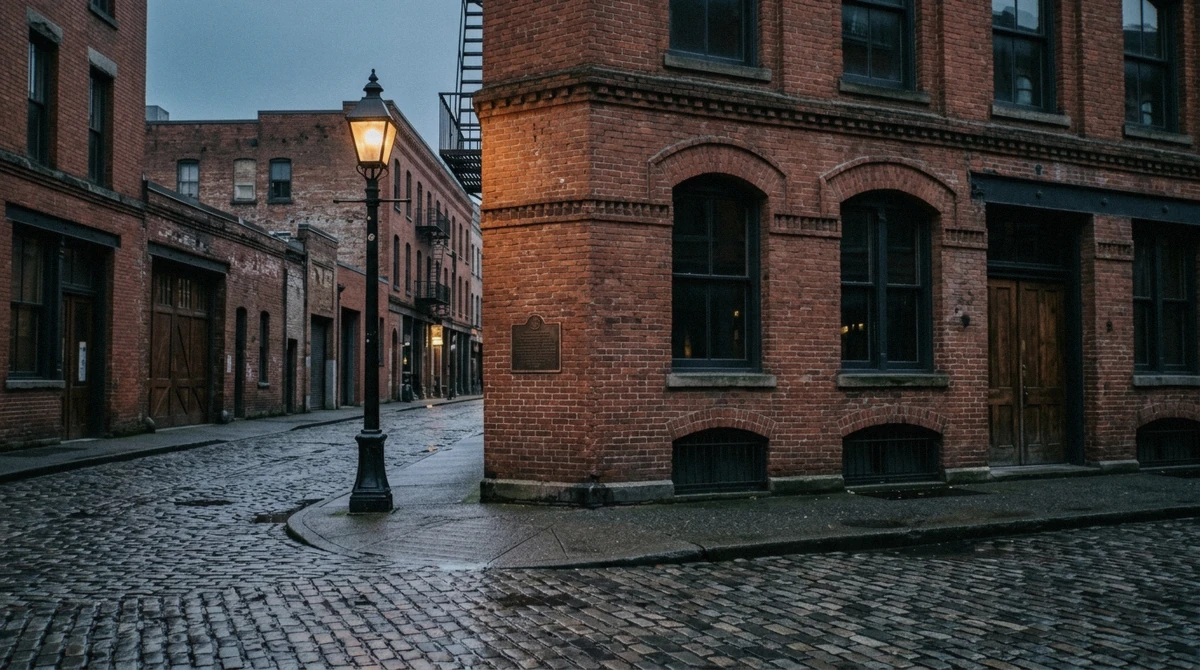
The corner of Water and Carrall, where Powell and Alexander meet them, is the closest thing the fire has to a ground zero you can visit. John Deighton's Deighton House stood on the first subdivided lot in the settlement and burned on 13 June. The Byrnes Block that stands on the site was put up in 1886 and 1887, immediately after, and it is one of the oldest buildings in the city precisely because it postdates the fire by months.
The square no longer holds the statue you may have read about. The bronze figure of Deighton on a whisky barrel was pulled down on 14 February 2022 during the annual Women's Memorial March for missing and murdered Indigenous women, in protest at Deighton's marriage to a Squamish girl who told the city's first archivist she had been about twelve; the City removed the remaining pedestal that April. Guidebooks written before 2022 still send people to look at it. The site is worth standing on anyway, and every brick around it is post-fire. The Gastown page covers what else is on that block, and Chinatown is four minutes' walk east, on ground where the Chinese labourers of the Hastings Mill and the CPR later built the neighbourhood that is there now.
The Hastings Mill Store, at the foot of Alma Street
The one survivor you can walk into. The store was built in 1865 as the settlement's first general store, and it is one of the very few structures that came through the fire. In the early 1930s it was barged around Point Grey to the foot of Alma Street by the Native Daughters of British Columbia and reopened as a museum in 1932, and it is generally described as the oldest building in Vancouver.
It sits well outside the downtown, at Hastings Mill Park in Kitsilano, which is why most visitors never see it. Its opening hours are seasonal and limited, and we have not verified them from the museum's own site in this run, so check before you go rather than turning up on the strength of this paragraph.
CRAB Park at Portside, on the shore people ran to
Part of the land the fire took is now CRAB Park, on the waterfront east of Canada Place, and it is on this stretch of shoreline that people went into Burrard Inlet and the canoes came across from the North Shore. It is a working park with grass, a playground and a view of the freighters, and it exists because Downtown Eastside residents campaigned for it through the 1980s, camping on the site in sixty tents until the land was transferred.
Be aware of two things. There is no interpretive plaque about the fire on the site: the Vancouver Heritage Foundation, which lists the location, notes that no plaque text or presentation has happened. And CRAB Park has for several years been the city's only sanctioned encampment. Go, stand on the shore, understand what happened in the water in front of you, and behave like someone visiting a place where people live.
Mountain View Cemetery, and why the fire's dead are not there
This is the correction, and it is the most-repeated wrong turn in fire tourism. Vancouver's municipal cemetery on Fraser Street opened in 1886, which makes it sound like the obvious resting place for the fire's victims. It is not: the cemetery's first recorded interment took place on 26 February 1887, more than eight months after 13 June. It cannot hold anyone who died in the fire itself.
We could not read the City's own cemetery pages in this run, because vancouver.ca refuses automated requests, so that opening date and first interment come from the public encyclopaedia record rather than from a municipal source. Where the fire's dead were buried is not settled in any of the accounts we read, which is consistent with a death toll nobody has ever agreed on. Mountain View is a genuinely interesting Victorian cemetery and worth a visit on its own terms. It is not a memorial to 13 June 1886, and a guide that tells you it is has not checked.
Where Every Figure on This Page Came From
Nothing above is original research and none of it should be taken on our word. The account draws on Lisa Anne Smith's Vancouver is Ashes: The Great Fire of 1886 (Ronsdale Press, 2014), which is the only book-length treatment and the source most of the modern retellings sit on; Robert A. J. McDonald's Making Vancouver: Class, Status and Social Boundaries, 1863-1913 (UBC Press, 1996), which is where the Alderman Gallagher testimony and the surviving-hotels detail come from; and Chuck Davis's Greater Vancouver Book and Chuck Davis History of Metropolitan Vancouver, which supply the timing quotations that disagree with each other.
For the Squamish rescue: the Vancouver Heritage Foundation's Places That Matter entry for CRAB Park, drawing on Maurice Nahanee's account in Storyscapes, prepared for the City of Vancouver in 2003, and on CBC's reporting of the City's 2017 motion and of the 2018 Paddle Song event. For the contemporary reports: the Quebec Daily Telegraph and the Manistee Weekly Times of 15 June 1886, The Day of New London of the same date, the Toronto World of 16 June, and the Vancouver Daily News of 17 June.
The photographs in the archives are mostly the work of Harry Devine and of Major James Skitt Matthews, the city's first archivist, and are held by the City of Vancouver Archives. If a date on a Great Fire photograph looks convenient, check it: one of the best-known images, of the makeshift city hall at the foot of Carrall Street, was long believed to have been taken days after the fire and was in fact shot that September. For the shape of a first visit, start from the Vancouver city guide.
Walking the Ground With a Guide
The fire's whole footprint is walkable in an afternoon and several operators cover it as history rather than as scenery. Prices are the US-dollar figures listed on the platform when we read them in Q3 2026, and the seller confirms the final amount in your own currency at checkout.
 from $120.36
Top rated
from $120.36
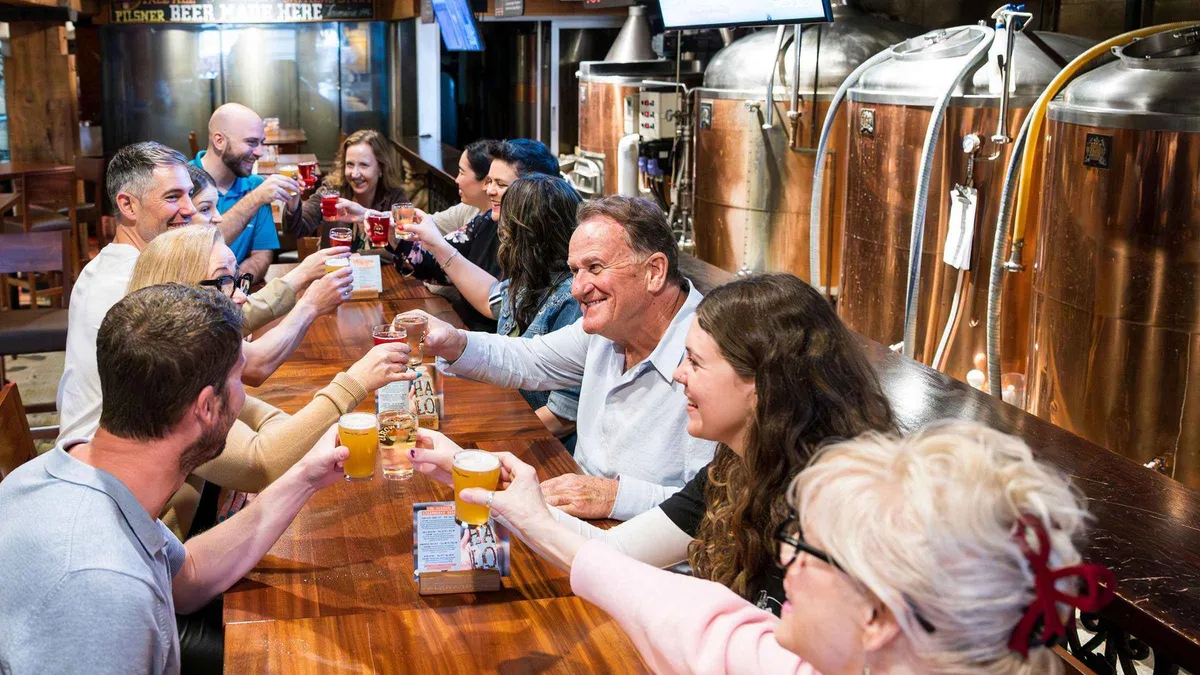
Top rated Vancouver: Gastown Historical Walking Food Tour
Three hours and seven venues in Gastown with six tastings, two of them desserts, and four alcoholic drinks with non-alcoholic swaps available. Dietary requests need 24 hours notice, and three of the stops involve stairs.
Check Availability from $5
Vancouver Uncovered: Downtown History & Culture Walk
Three hours on foot through downtown with a local guide covering architecture, street art and how the neighbourhoods fit together. Gratuities are not included and cash is listed among what to bring.
Check Availability from $90.69
Certified by GetYourGuide
from $90.69
Certified by GetYourGuide Vancouver: Chinatown Heritage Walk and Dim Sum Lunch
Two and a half hours through Chinatown with access to heritage building interiors, a tea tasting at the neighbourhood's oldest tea shop and a dim sum lunch to finish. Only five reviews so far, so the sample is thin.
Check Availability from $122.28
Top rated
from $122.28
Top rated Vancouver City Tour+Stanley Park+Granville Island+China+Gas
Four hours by car rather than coach, covering Prospect Point, the totem poles, Granville Island, the Steam Clock, Chinatown and English Bay. Every stop is a free public site, so what you pay for is the driving and the commentary.
Check Availability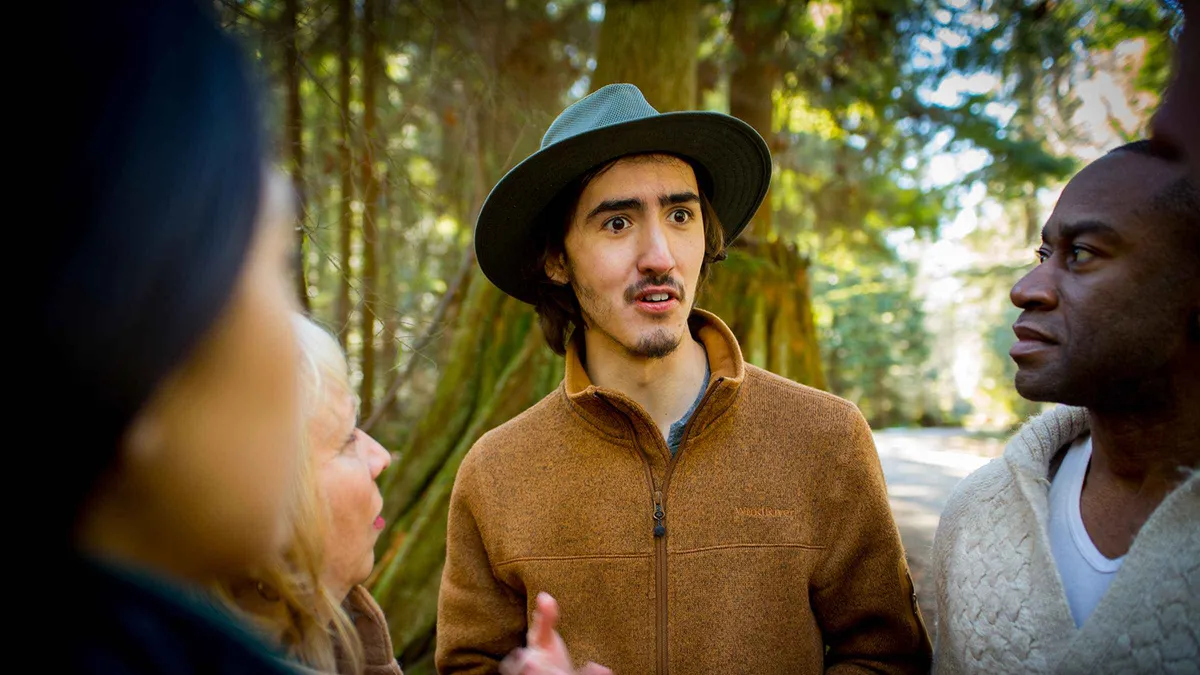 from $28.29
Vancouver: The Dark Secrets of Stanley Park Tour
Two hours off the main paths with a storyteller, covering the forced evictions of Coast Salish families, the smallpox history of Deadman's Island and the park's hidden cemeteries. Adult subject matter, ending back at the aquarium.
Check Availability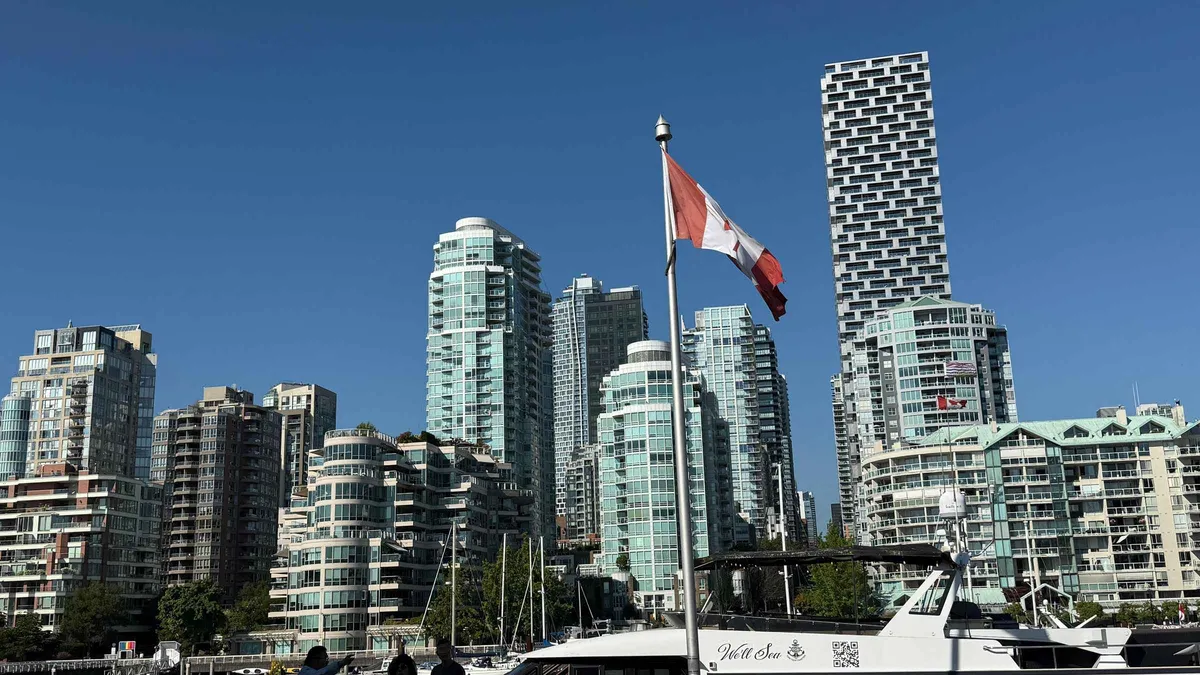 from $50.12
Top rated
from $50.12
Top rated Vancouver: Hop-On Hop-Off City Tour, SMALL GROUP "12 STOPS"
A hop-on hop-off route run in 15-seat vans rather than buses, with 24, 48 and 72 hour passes and 12 to 17 stops depending on the pass. The driver is not a guide and no attraction tickets are included.
Check AvailabilityPrices, ratings and details are the platform's own, checked in Q3 2026; dollar figures are the listed prices — the platform bills in your account's currency.
The Great Vancouver Fire: the Questions People Ask
What caused the Great Vancouver Fire?
Two deliberate land-clearing fires that got away in a wind. One was to the south-west, clearing ground for the Canadian Pacific Railway's roundhouse at the new terminus; the other was near Cambie and Cordova, clearing land to extend the city westward. Three weeks of abnormal heat and a great deal of forest deadfall and fresh clearing debris did the rest, and when the breeze turned to a gale the two fronts joined.
What year did Vancouver burn down, and how old was the city?
1886, on Sunday 13 June. The township of Granville had been incorporated as the City of Vancouver on 6 April that year, so the city was about ten weeks old. Its volunteer hose company had held its first meeting on 28 May, sixteen days earlier, and the steam pumper it had ordered arrived two months after the fire.
How many people died in the 1886 fire?
Nobody knows, and the sources disagree by a factor of ten. Alderman Gallagher, a witness, counted 21 bodies or parts of bodies immediately afterwards, with more found during the cleanup. On This Spot gives some 28. Contemporary newspapers reported 5, 12 and 50 within three days of each other. The population was changing weekly and much of the mill workforce was transient, so there was no list of who was in town.
What was Vancouver called before 1886?
Granville, officially, and Gastown colloquially after the saloon keeper John Deighton. It took the name Vancouver at incorporation in April 1886 and burned down in June of the same year. The neighbourhood kept the older name, and the Gastown page covers what stands there now, all of it built after the fire.
Is there anything left from before the fire?
Very little. The Vancouver Heritage Foundation puts the survivors at about three buildings, of which the Hastings Mill Store is the one you can visit; it was barged to the foot of Alma Street in the early 1930s and reopened as a museum in 1932. The Regina Hotel at the north of town and the Bridge Hotel at the south-east also came through, the latter's side building serving as a morgue.
Who saved the people in the water?
Squamish people from the north-shore village of Ustlawn, who launched dugout canoes when they saw the smoke, sang the Paddle Song as they paddled, and ferried survivors back to Eslhá7an, opening their homes and their church. The City of Vancouver did not formally acknowledge them until June 2017. Their descendants still sing the song at ceremonies and funerals.
The Fire on Film
Three tellings from people who work with the material: the city's own fire service, a survivor-testimony reconstruction, and an archive-photograph walk through the city that came after.
The Great Vancouver Fire of 1886
The account as the city's own firefighters tell it, which is the version that treats the volunteer hose company and the missing pumper as the centre of the story.
Video: Vancouver Fire FightersGreat Fire of Vancouver: Survivors Speak, Black Sunday in Gastown
Built out of survivor testimony, which is where most of the vivid detail in the written accounts originally comes from.
Video: BC HistoryThe Great Vancouver Fire: Old Photos 1886 to 1900
The archive photographs walked through in order, including the rebuilding, which is the part of the story the anniversary posts usually skip.
Video: New West ResetVideos load from YouTube only when you press play.