 Vancouver Trip Guide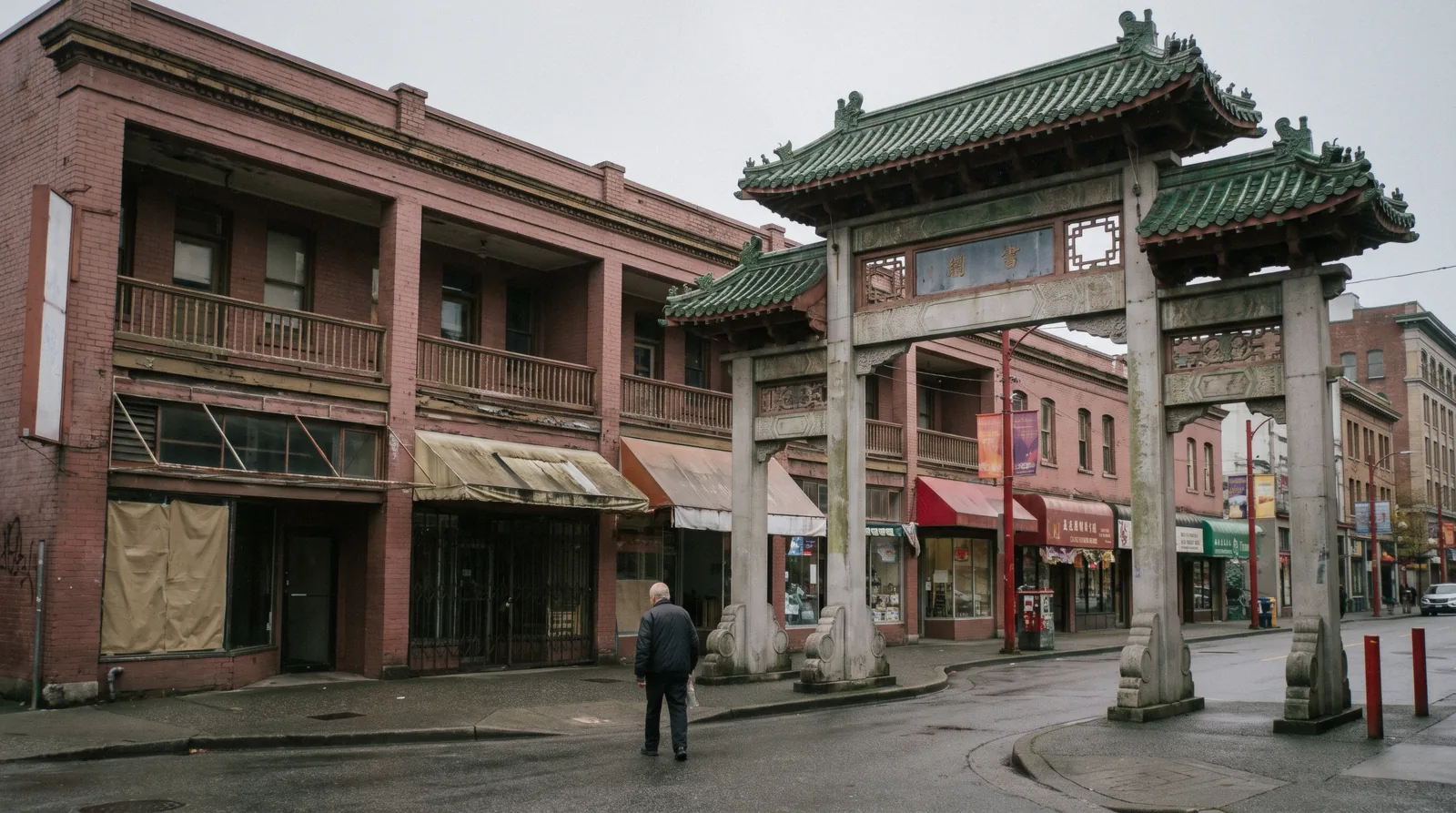
Chinatown, Vancouver
Chinatown Vancouver is a National Historic Site of Canada centred on Pender Street between Taylor Street and Gore Avenue, seventy contiguous properties of a hybrid architecture Parks Canada calls the "recessed balcony" style. It is also a neighbourhood that lost most of its shops, is the subject of a City transformation plan and a UNESCO bid, and is inside the Downtown Eastside in the City's own planning language. This page has the hours and prices of the things that are open, the wording the official record actually uses, the claim about its size that Parks Canada does not make, and where to eat according to a published list.
Quick answer What is open, what it costs, which days to avoid
Vancouver's Chinatown is free to walk and centred on six blocks of Pender Street, ten minutes on foot south of Maple Tree Square. Two things inside it charge admission, and both close for two days a week rather than one: the Chinese Canadian Museum is shut Mondays and Tuesdays, the classical garden is shut Mondays.
Key takeaways
- The Chinese Canadian Museum at 51 East Pender is the reason to come: $13.04 (CA$18) for adults, Wednesday to Sunday 10:00 to 17:00, inside the Wing Sang Building of 1889, the oldest brick building in Chinatown. All the hours and prices are in the table below.
- If you want the district explained rather than guessed at, the Chinatown heritage walk with dim sum lunch runs two and a half hours, includes entry to heritage buildings, a tea tasting and the lunch, and meets at 209 East Pender Street.
- Chinatown is widely called the second-largest historic Chinatown in North America. Parks Canada does not say that. Its designation record says "one of the oldest and largest Chinatowns in Canada", which is a different and smaller claim.
- The Millennium Gate is free and marks the western entrance; the Dr. Sun Yat-Sen Classical Chinese Garden and its free public park are two blocks east, and Gastown is ten minutes north.
What Is Open in Chinatown: Hours, Prices and Closed Days
Prices and hours read in Q3 2026 from each institution's own site: chinesecanadianmuseum.ca, vancouverchinesegarden.com, vancouverpolicemuseum.ca and Parks Canada's designation record. Canadian dollars are the published figures; US dollars are converted at CA$1 = US$0.7244.
| Place | Adult price | Open | Closed | Watch out for |
|---|---|---|---|---|
| Chinese Canadian Museum, 51 E Pender St | $13.04 (CA$18); senior and student $10.14 (CA$14); youth 6 to 18 $8.69 (CA$12); under 5 free; family $34.80 (CA$48) | Wednesday to Sunday, 10:00 to 17:00 | Mondays and Tuesdays | Two closed days, not one. Groups of ten or more must email at least 24 hours ahead |
| Dr. Sun Yat-Sen Classical Chinese Garden, 578 Carrall St | $11.59 (CA$16); senior $9.42 (CA$13); student and ages 6 to 17 $8.69 (CA$12); family $23.20 (CA$32) | Tuesday to Sunday, 09:30 to 16:00, last entry 15:30 | Mondays | The garden's own page warns that people who have not registered "can be denied entry" |
| Dr. Sun Yat-Sen Park, next door | Free | Public park, City of Vancouver Park Board | Not stated | It is not the ticketed garden. Two separate places sharing a wall |
| Chinatown Millennium Gate, W Pender at Taylor | Free | Spans a public street, any hour | Never | Erected 2002; marks the western edge of the national historic site |
| Vancouver Police Museum, 240 E Cordova St | CA$14 adult, before tax | Thursday to Saturday 10:00 to 17:00; Sunday 12:00 to 17:00 | Monday to Wednesday and statutory holidays | Closing this address on 31 October 2026 and moving to the Woodward's building, soft opening November. Every figure here expires with the move |
The Chinese Canadian Museum publishes no tax statement; the garden's admission table does not say whether GST is included; the police museum states plainly that its prices exclude tax and GST is added at checkout. Where a venue does not say, this table does not guess.
Guided Ways Into Chinatown, Compared
One tour is built around this district; the others pass through it as part of a wider city route. Ordered by how much of their running time is spent on Pender Street. Prices, ratings and review counts as the operators listed them in Q3 2026.
 from $90.69
Certified by GetYourGuide
from $90.69
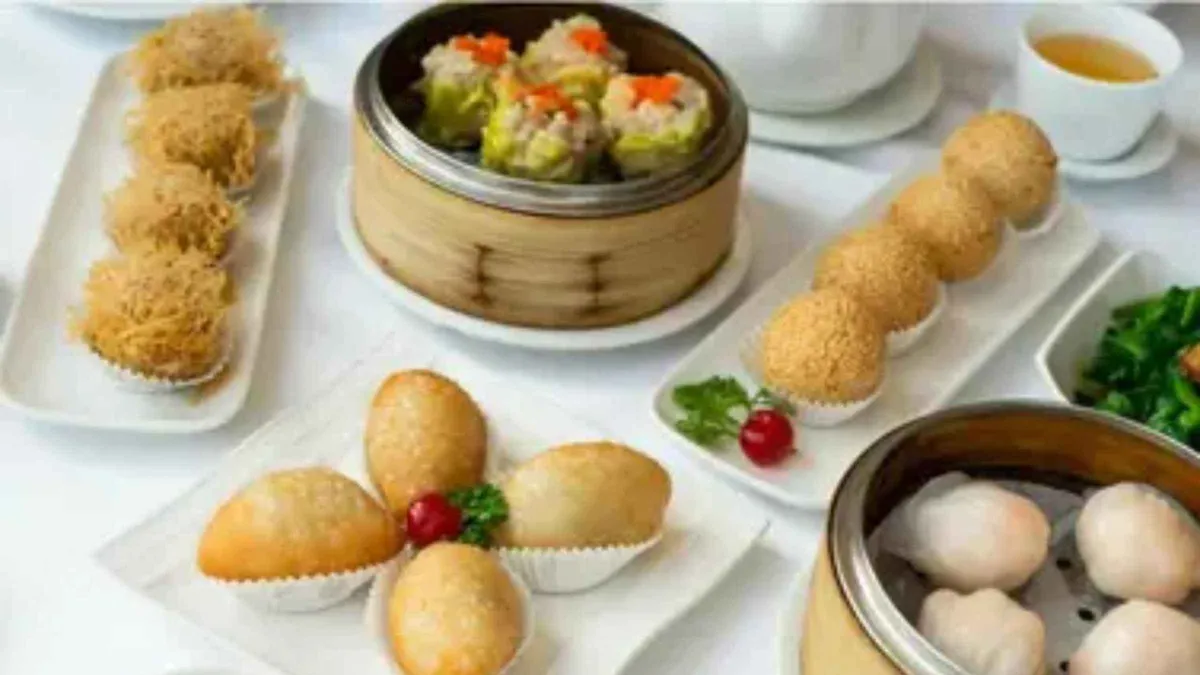
Certified by GetYourGuide Vancouver: Chinatown Heritage Walk and Dim Sum Lunch
Two and a half hours through Chinatown with access to heritage building interiors, a tea tasting at the neighbourhood's oldest tea shop and a dim sum lunch to finish. Only five reviews so far, so the sample is thin.
Check Availability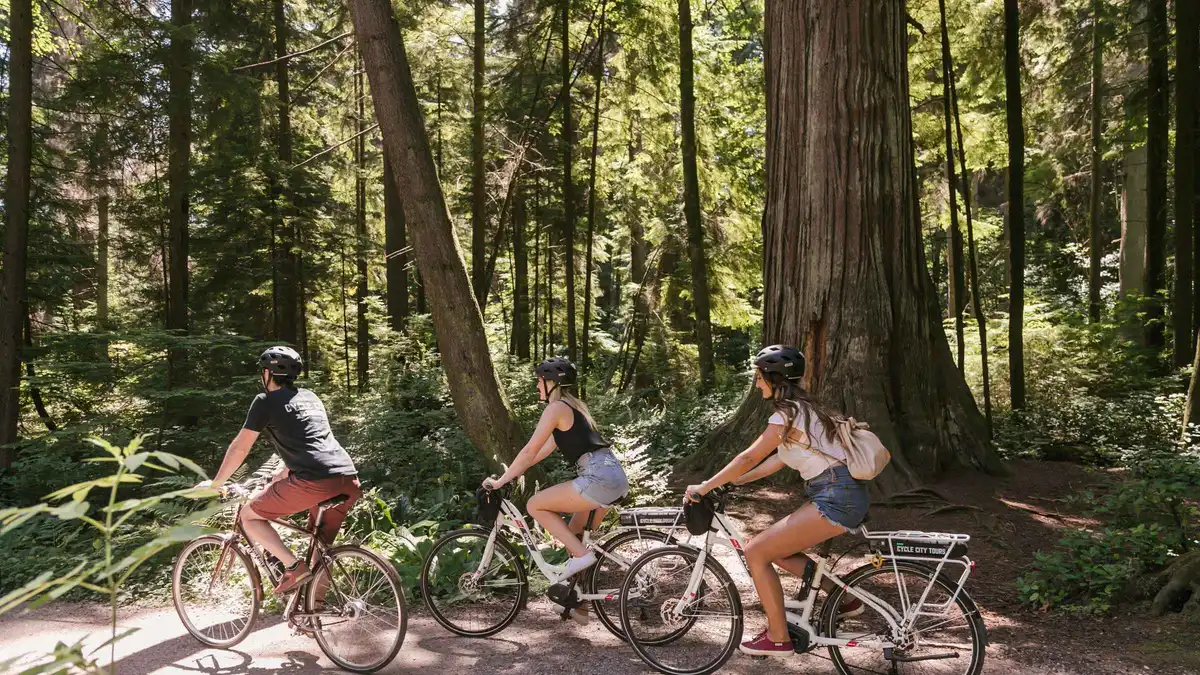 from $104.69
Top rated
from $104.69
Top rated Vancouver: Half-Day City Highlights E-Bike Tour Age 16+
Four hours on an e-bike through Stanley Park to Prospect Point, then Yaletown, Olympic Village, Chinatown and Gastown, almost all of it away from traffic. Riders must be 16 or over and able to handle light exercise.
Check Availability from $122.28
Top rated
from $122.28
Top rated Vancouver City Tour+Stanley Park+Granville Island+China+Gas
Four hours by car rather than coach, covering Prospect Point, the totem poles, Granville Island, the Steam Clock, Chinatown and English Bay. Every stop is a free public site, so what you pay for is the driving and the commentary.
Check Availability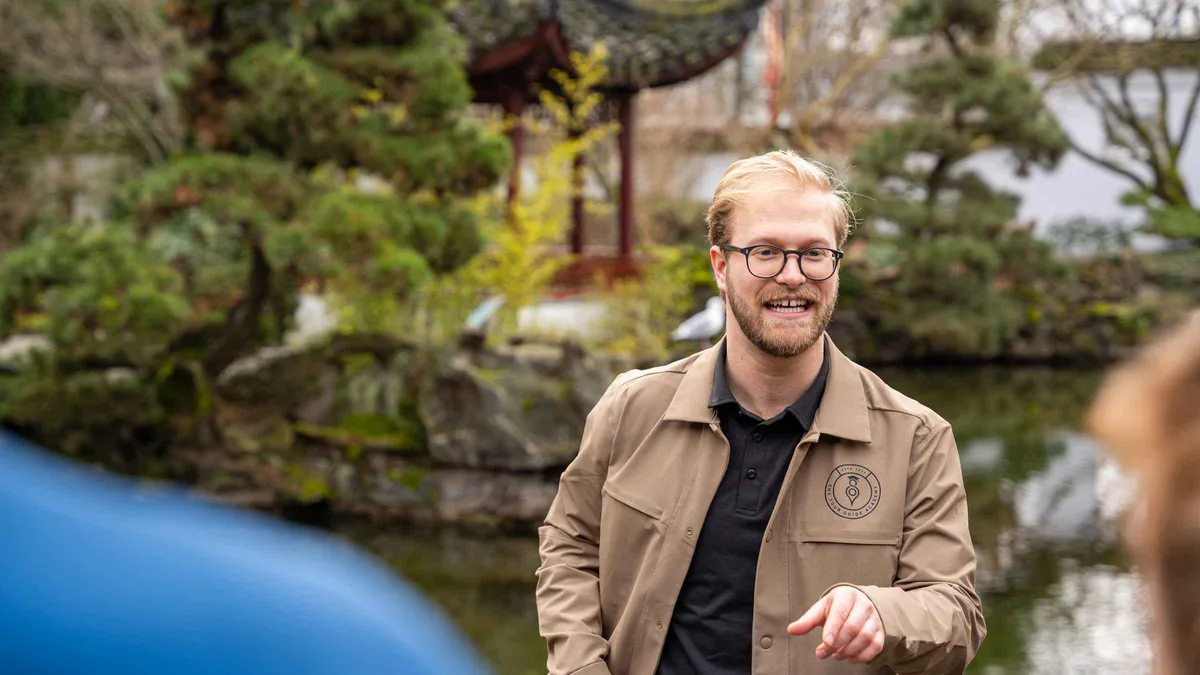 from $5
Vancouver Uncovered: Downtown History & Culture Walk
Three hours on foot through downtown with a local guide covering architecture, street art and how the neighbourhoods fit together. Gratuities are not included and cash is listed among what to bring.
Check Availability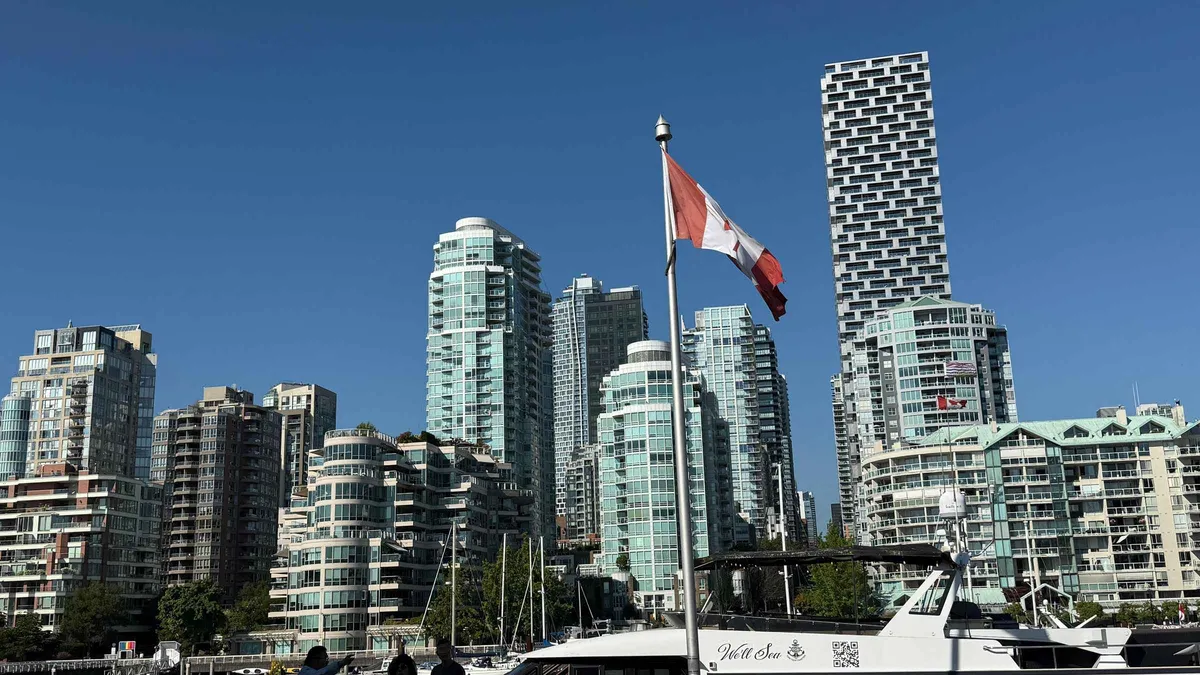 from $50.12
Top rated
from $50.12
Top rated Vancouver: Hop-On Hop-Off City Tour, SMALL GROUP "12 STOPS"
A hop-on hop-off route run in 15-seat vans rather than buses, with 24, 48 and 72 hour passes and 12 to 17 stops depending on the pass. The driver is not a guide and no attraction tickets are included.
Check AvailabilityPrices, ratings and details are the platform's own, checked in Q3 2026; dollar figures are the listed prices — the platform bills in your account's currency.
The Size Claim, and What the Official Record Actually Says
Almost every article about Vancouver's Chinatown opens with a superlative. The federal designation does not, and the difference is worth two minutes.
Parks Canada designated Vancouver's Chinatown a National Historic Site of Canada in 2011, and its published wording is careful: "First settled in the 1880s, Vancouver's Chinatown is one of the oldest and largest in Canada." One of the oldest and largest, in Canada. Not the second largest in North America, which is what you will read almost everywhere else, and which no official source we could find states. We are not saying the popular claim is wrong; we are saying nobody with authority publishes it, so this page prints what the record does say.
What the record does say, precisely
The site is "a distinct neighbourhood on the east side of downtown Vancouver, centred on Pender Street, between Taylor Street in the West and Gore Avenue in the East and the lanes north and south of Pender". It comprises "70 contiguous properties, representing a mix of commercial, residential, and cultural buildings, along with courtyards and alleys". Buildings sit at the front property line and run two to four storeys.
Formal recognition was recorded on 19 July 2011.
The architecture has a name
The style is the reason the designation exists, and once you have the phrase you cannot stop seeing it. Parks Canada: the buildings are "characterized by a distinctive hybrid architectural style that blends aspects of Chinese regional architecture with western styles and building methods", with "recessed balconies, a strong verticality, and high ceilings at ground-level with mezzanines". The balconies are set back into the facade rather than projecting from it, which is a Guangdong habit applied to a North American brick shophouse.
Look up on the north side of East Pender between Carrall and Main and you will see a dozen of them in a row.
The numbers behind the neighbourhood
Parks Canada's own backgrounder gives the arc in figures. A Chinese settlement grew on Dupont Street, renamed East Pender after 1904, west of Main Street, on a 65-hectare (160-acre) lease granted on the outskirts of town when Vancouver was incorporated in 1886. By 1900 the neighbourhood had some sixty businesses; by 1901 its population was almost 2,900; by 1921 it had risen to 6,484.
Then the Chinese Immigration Act of 1923 stopped new arrivals and, in Parks Canada's words, "the neighbourhood went into a period of stagnation, and the community of largely aging bachelor men was unable to grow without new immigration". The Great Depression finished the job.
Vancouver's Chinatown is a National Historic Site of Canada; the designation record is at https://parks.canada.ca/culture/designation/lieu-site/quartier-chinois-vancouver-chinatown, read in Q3 2026.
Chinatown in Ten Dated Lines
The dates below are taken from Parks Canada's designation backgrounder for Vancouver's Chinatown and from the Chinese Canadian Museum's own published history of the Wing Sang Building. Nothing here is inferred.
-
Early 1880s
The first settlement
Chinese residents settle at the end of Carrall Street, before the city exists.
-
1886
A lease on the edge of town
Vancouver is incorporated; the Chinese are granted a 65-hectare (160-acre) lease on the outskirts, and a settlement grows on Dupont Street west of Main.
-
1889
The Wing Sang Building
Built by the merchant Yip Sang for the Wing Sang Company. It is the oldest brick building in Chinatown, and today it holds the Chinese Canadian Museum.
-
1901-1921
Growth, then a wall
Population rises from about 2,900 to 6,484; the buildings still standing on Pender go up largely in the 1910s and 1920s, along with the Society buildings for the clan and district associations.
-
1904
Dupont Street becomes East Pender
The street name most visitors know dates from here.
-
1912
Wing Sang's second expansion
A six-storey rear addition houses Yip Sang's three wives and twenty-three children alongside the business.
-
1923
The Chinese Immigration Act
New arrivals stop. Parks Canada records the resulting decades as "a period of stagnation".
-
2002
The Millennium Gate
Parks Canada names "the Millennium Gate (2002)" at West Pender and Taylor among "significant newer cultural resources" enhancing the traditional character of the area.
-
2011
National Historic Site of Canada
Formal recognition recorded 19 July 2011, covering 70 contiguous properties centred on Pender between Taylor and Gore.
-
1 July 2023
The Chinese Canadian Museum opens
Permanently at home in the Wing Sang Building. In 2025 the museum expanded its exhibition space, lobby and education centre and added seismic upgrades.
Sources: Parks Canada, Vancouver's Chinatown National Historic Site of Canada designation record and backgrounder (backgrounder last updated 2017-04-27); Chinese Canadian Museum, "The Wing Sang Building". Read in Q3 2026.
The Decline, and the Plan: What the City Has Actually Committed To
You will notice the empty shopfronts before you notice anything else, so it is better to explain them than to photograph around them.
Chinatown is not a preserved district in the sense that a visitor might expect. Many storefronts on Pender and Keefer are shuttered, several heritage buildings are unoccupied above the ground floor, and the businesses that made the neighbourhood a place people shopped in have largely gone to Richmond, where the suburban Chinese-Canadian population now is. This is documented, not impressionistic: the City's Downtown Eastside Plan, passed by Council in March 2014, records more than 400 businesses in Chinatown against "over 700" in Gastown, in a district roughly the same size.
Chinatown is inside the Downtown Eastside
The City's planning language is blunt about the geography, and it explains a great deal about how the walk feels. The 2014 plan states that "the DTES local planning area comprises of seven sub-areas: Chinatown, Gastown, Industrial Area, Oppenheimer District, Strathcona, Thornton Park and Victory Square." Chinatown is not beside the Downtown Eastside; in the City's own documents it is one of its seven parts. East Hastings runs one block north of Pender at the Carrall end, and the visible street distress there is the single most common thing first-time visitors write about afterwards.
What the police actually record, and what a visitor should do about it, is on Vancouver safety and scams.
What is being done, from official sources
The response has a name. The City, working with a Chinatown Transformation Team and a community-led Chinatown Legacy Stewardship Group, developed a Cultural Heritage Assets Management Plan strategic framework, and in June 2022 Council approved it and voted to proceed with a bid for UNESCO World Heritage designation. The City has since put capital grants into the Chinese Cultural Centre, the Chinese Canadian Museum and the Dr. Sun Yat-Sen Classical Chinese Garden, and funded community programming including the Fire Dragon Festival.
A caveat about our own sourcing
vancouver.ca returns an HTTP 403 to automated readers, so the City's Chinatown pages could not be read directly for this page. The plan documents quoted above were read as published PDFs, and the CHAMP and UNESCO decisions are recorded in Council coverage rather than read off the City's own page. If a figure here matters to you, check vancouver.ca in a browser: it serves people fine, just not machines.
What this means for a visit
Come in daylight, come on a Wednesday to Sunday so the museum and the garden are both open, and treat the district as a place with a working community rather than a themed street. The businesses that have survived tend to be old, family-run and worth your money precisely because they survived. The neighbourhood does not need pity and it is not a ruin; it is a National Historic Site in the middle of a difficult decade, and the most useful thing a visitor does is spend money in it.
The Things to See, In the Order the Street Delivers Them
West to east along Pender, which is how the Millennium Gate is designed to be entered and how the walk hands you on to the garden at the far end.
The Millennium Gate spans West Pender at Taylor Street and marks the western entrance. It is free, outdoors and has no hours, and Parks Canada records the year as 2002, listing it among the "significant newer cultural resources" that "enhance the traditional Chinese character of the area". It is also the exact point Parks Canada names as the historic site's western boundary, so the gate is doing real work rather than decoration.
The Chinese Canadian Museum, 51 East Pender Street
The one indoor thing that justifies the trip on its own. Adult admission is $13.04 (CA$18); seniors 65 and over and students with valid Canadian student ID pay $10.14 (CA$14); youth 6 to 18 pay $8.69 (CA$12); under-fives are free; a family ticket covering up to two adults and three youth is $34.80 (CA$48). Open Wednesday to Sunday, 10:00 to 17:00.
The building is the point as much as the exhibitions: it is the 1889 Wing Sang Building, the oldest brick structure in Chinatown, whose name translates as "everlasting".
The two gardens, which are not the same place
This confuses more visitors than anything else in the district. The Dr. Sun Yat-Sen Classical Chinese Garden at 578 Carrall Street is ticketed, walled, and open Tuesday to Sunday 09:30 to 16:00 with last entry at 15:30. Dr. Sun Yat-Sen Park next door is free, run by the City of Vancouver Park Board, and, in the Garden's own words, is "the park containing mostly plant material; and the Garden serving as the architectural heart of the scholar's home".
If you have twenty minutes and no ticket, the park is a real place to spend them. The full ticket comparison is on the garden's own page.
The shophouses on East Pender
Between Carrall and Gore, look above the ground floor. The recessed balconies Parks Canada singles out run in sequence here, along with the Society buildings put up by clan and district associations in the 1910s and 1920s, several of which still have their associations in them. The narrowest building in the world, a much-photographed sliver on West Pender, is a Chinatown fixture that the designation record does not mention at all, which tells you something about the difference between the district's marketing and its heritage case.
The 40th anniversary year
The classical garden marks its fortieth anniversary in 2026, with anniversary programming that began in April and a fortieth annual Mid-Autumn Moon Festival on 26 and 27 September 2026. Scheduled public tea ceremonies run Saturdays and Sundays at 10:30, 11:45 and 13:00. Staged photo shoots, whether with a professional or a friend, are not permitted during public opening hours, which is worth knowing before you arrive with a tripod.
Eating in Chinatown: The Two a Published List Has Named
We name a restaurant only where a published list names it. Both of these come from the 2026 Vancouver Magazine Restaurant Awards, announced 4 May 2026, and both also hold a MICHELIN Guide distinction in the Vancouver selection.
-
Phnom Penh
Readers' Choice winner for Best Chinatown in the 2026 Vancouver Magazine Restaurant Awards, and a Bib Gourmand in the MICHELIN Guide's Vancouver selection. Family-run Cambodian and Vietnamese since 1985. The magazine's own line: "The salt-pepper-sugar wings are the move, and the beef luc lac seals the deal."
- Address
- 244 East Georgia Street, Vancouver, BC V6A 1Z7
- Hours
- Not stated in the awards listing; the restaurant does not publish hours on a website of its own
-
Kissa Tanto
Bronze in Best Upscale Contemporary at the 2026 Vancouver Magazine Restaurant Awards and a One Star in the MICHELIN Guide Canada's 2025 Vancouver selection. Japanese and Italian on the same menu, in a room modelled on the jazz cafes of 1960s Tokyo, on the first floor above Pender.
- Address
- 263 East Pender Street, Vancouver, BC
- Hours
- Dinner only; reservations through the restaurant's own site
Dim sum is what most visitors come for and it is the one thing we cannot responsibly name: no citable list we could read names a specific Chinatown dim sum house, and the well-known ones are family businesses that do not publish hours. The heritage walk with dim sum lunch resolves this by taking you to one, with the dishes explained, and includes a tea tasting at what the operator describes as the city's oldest Chinese tea shop.
Getting There, and How Long to Give It
Chinatown is small, flat and awkward to drive into, and the transit answer is different depending on which end of Pender you want.
Stadium-Chinatown Station on the Expo Line is under a ten-minute walk from the Chinese Canadian Museum. The museum's own directions are the clearest published route: "Exit the station from the Keefer Place exit, go down the steps and turn left onto Abbott Street. Walk until you reach Pender Street.
Turn right onto Pender Street and continue until you arrive at 51 E. Pender St." By bus, the 4, 7, 19 and 22 all stop at Carrall and Pender, directly across from the museum.
| Getting to Chinatown | Cost | Approx. USD | Time | Notes |
|---|---|---|---|---|
| Walk from Maple Tree Square in Gastown | Free | Free | 10 minutes | South on Carrall Street, in daylight |
| SkyTrain to Stadium-Chinatown, 1 zone | CA$2.85 stored value / CA$3.50 cash | $2.06 / $2.54 | Under 10 min walk from the platform | Expo Line; bus trips are 1-zone at all times |
| Bus 4, 7, 19 or 22 to Carrall at Pender | CA$2.85 stored value | $2.06 | Stops opposite the museum | All bus trips are a 1-zone fare whatever the distance |
| Adult DayPass, all zones | CA$12.55 | $9.09 | All day | Pays for itself from roughly three zone-crossing trips |
| Parking | CA$2 per hour on the street; EasyPark parkade at 106 Keefer Street | $1.45 per hour | Add 10 min to find a space | The museum publishes both figures and has no lot of its own |
The weekday fare rule that saves you money
TransLink's published rule is that "all trips across the system starting after 6:30 p.m. (Monday to Friday) and all travel on weekends (Saturday and Sunday) are a 1-Zone fare". Since almost every Chinatown trip from downtown is one zone anyway, the rule matters mainly if you are coming from Richmond or Burnaby.
Adult fares effective 1 July 2026; the full breakdown is on getting around Vancouver.
How long to give the district
An hour walks Pender end to end with stops at the gate and the shophouses. Two and a half hours is the museum plus the walk. Half a day covers the museum, the classical garden and lunch, which is the version most people should do, and is roughly what the guided walk delivers in a package at two and a half hours including the meal.
Combine it with Gastown and you have a full and satisfying day on foot without paying for transport.
Which day to come
Wednesday to Sunday. Monday closes both the museum and the classical garden, and Tuesday closes the museum. That is unusual for Vancouver, where museums are largely open on Mondays, and it catches people who have applied the European rule in reverse.
If Monday is your only day, the free things still work: the gate, the streets, the shophouse balconies and the free Dr. Sun Yat-Sen Park. Where this sits in a full itinerary is set out on Vancouver, Canada.
Chinatown on the Map: The Pender Street Walk
Red pins are the walk along Pender from the Millennium Gate east. Green pins are the two ways in and the district next door. Pin positions come from OpenStreetMap and from the addresses each institution publishes.
Coordinates read from OpenStreetMap in Q3 2026. Parks Canada publishes no coordinates for the Millennium Gate and no Wikidata item exists for it.
Next Stop From Chinatown
Walk times are our own estimates on flat ground from the published addresses.
The classical garden, in detail
Every ticket tier, the tea ceremony times, the anniversary programme and how the free park next door differs: Dr. Sun Yat-Sen Classical Chinese Garden.
3 minutes from the museumGastown, ten minutes north
The warehouse district, the steam clock and the empty plinth, and the other half of the standard walking day: Gastown.
10 minutes on Carrall StreetWhere to eat across the city
How Chinatown's food compares with Granville Island, Mount Pleasant and the Richmond suburbs where most of the district's shops went: where to eat in Vancouver.
City-wideStaying Near Chinatown, and Why Most People Should Not
We found no published rate survey for these blocks that we would print, so this block says what each area suits and what the walk costs, rather than inventing a nightly figure. Rates on the booking sites move by season, by weekend and by convention.
Chinatown and Crosstown
- Walking distance
- On Pender Street; 10 minutes to Gastown
- Typical double
- No rate quoted: no rate survey for this district could be sourced
- Suits
- Return visitors, budget travellers, anyone whose trip is built around the food and the museums
Honest version: there is very little conventional hotel stock here, the district is quiet and largely shut after 21:00, and the streets one block north on East Hastings carry the most visible street distress in the city. Some visitors are entirely comfortable with that and some are not, and the difference is temperament rather than risk.
See stays in Chinatown and CrosstownYaletown, fifteen minutes west
- Walking distance
- 15 minutes to the Millennium Gate
- Typical double
- No rate quoted from a source we would print
- Suits
- Visitors who want to walk to Chinatown by day and be somewhere polished at night
The compromise most people actually want: still walkable to Pender Street in the morning, on the seawall and the Canada Line, and a completely different street at midnight.
See stays in Yaletown, fifteen minutes westBritish Columbia adds 8 per cent PST plus the Municipal and Regional District Tax to hotel rooms, on top of the rate a booking site shows. All the areas compared side by side are on where to stay in Vancouver. We take a commission if you book through these links, at no extra cost to you.
Vancouver Chinatown: The Questions We Get Asked
Is Vancouver's Chinatown the second largest in North America?
Not according to anyone official. Parks Canada's designation record for Vancouver's Chinatown says "one of the oldest and largest in Canada", which is a Canadian claim, not a continental one, and no federal or municipal source we could read uses the North American ranking. The full wording is quoted above. What is documented is the designation itself, 70 contiguous properties centred on Pender between Taylor and Gore, recognised on 19 July 2011.
Is Vancouver's Chinatown worth visiting, given what people say about it?
Yes, in daylight, Wednesday to Sunday, with the Chinese Canadian Museum as the anchor. It is a working National Historic Site in a hard decade, not a themed street, and you will see boarded shopfronts alongside a museum that opened in 2023 and a garden marking its fortieth year. If you want it explained rather than guessed at, the heritage walk with dim sum lunch is two and a half hours and includes entry to heritage buildings.
Is Vancouver's Chinatown dangerous?
The district itself is a normal urban neighbourhood by day. The context is that the City's own Downtown Eastside Plan lists Chinatown as one of the seven sub-areas of the Downtown Eastside, and East Hastings runs a block north of Pender at the Carrall end, where visible homelessness and open drug use are concentrated. Distress you see is not directed at you and the recorded risk to visitors is property crime. Full detail on Vancouver safety and scams.
What is the Millennium Gate in Vancouver, and can you walk through it?
Yes, it spans a public street and costs nothing at any hour. Parks Canada dates it to 2002 and names it among the "significant newer cultural resources" that enhance the area's traditional character, and it stands at exactly the corner, West Pender at Taylor, that the designation names as the historic site's western boundary. It is the natural start of the walk east along Pender.
What days is everything closed in Vancouver's Chinatown?
Monday closes both ticketed places, and Tuesday closes the museum as well: the Chinese Canadian Museum runs Wednesday to Sunday 10:00 to 17:00, and the classical garden Tuesday to Sunday 09:30 to 16:00. This is the opposite of what visitors expect, because Vancouver museums are generally open on Mondays. The gate, the streets and the free Dr. Sun Yat-Sen Park work on any day: see the full table.
Where do you actually get dim sum in Vancouver's Chinatown?
We will not name one, and the reason is a rule rather than coyness: no citable list we could read names a specific Chinatown dim sum house, and the surviving family restaurants do not publish hours or menus we could check. The guided walk solves it by taking you to one with the dishes explained, and the two restaurants a published list does name, both with MICHELIN distinctions, are in the block above.
How long do I need in Chinatown, and can I combine it with Gastown?
An hour for the streets, two and a half hours with the museum, half a day with the garden and lunch. Gastown is ten minutes north up Carrall Street and the two together make a full walking day with no transport cost. Most guided city routes, including the half-day e-bike tour, treat them as one stop.
Chinatown On Film: The Street, the Food, the Empty Shopfronts
Three walk-throughs at street level that show the district as it is, including the parts a promotional video would cut.
The Best of Vancouver Chinatown: Food, Fun & Hidden Treasures
The food side of the district, from counters to the starred rooms, filmed on Pender and Keefer.
Video: Tim LeeVancouver Chinatown Food Tour: Best Cheap Eats, Must See & Essential Tips
A recent run through the surviving cheap eats, with practical notes on what is still open.
Video: B-ham BurdasGastown and Chinatown Walking Tour 4k, Downtown Vancouver
The two districts walked in sequence, which is the pairing this page recommends.
Video: TravelWalkSeeVideos load from YouTube only when you press play.
Reviewed Q3 2026 (July–September 2026); next review Q4 2026. Prices, hours and terms are set by the venue or operator and confirmed at checkout.
We may earn a commission if you book through one of our links, at no extra cost to you. Full affiliate disclosure