 Vancouver Trip Guide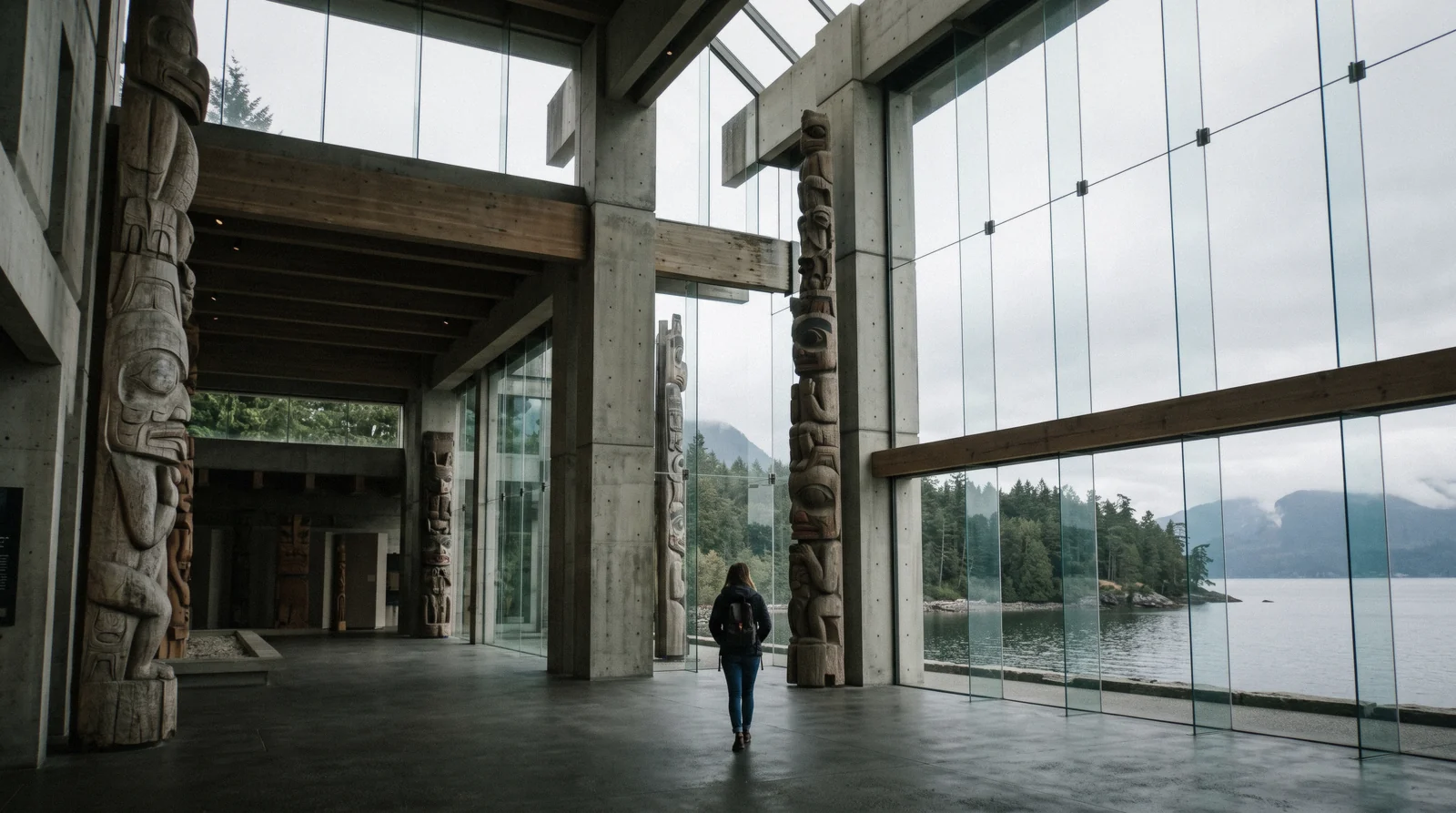
Museum of Anthropology at UBC
The Museum of Anthropology is the concrete and glass building at the far western edge of the University of British Columbia campus, above the sea at Point Grey, holding close to 50,000 objects and one of the strongest collections of Bill Reid's work anywhere. The museum states plainly that it "is built on the traditional, ancestral and unceded land of the Musqueam people". This page covers the hours, the prices, the Great Hall, the bus from downtown and how long the trip really takes. The rest of the city's indoor collections are compared on the museums and galleries hub, and the prices sit beside every other paid attraction on the Vancouver tickets page.
Quick answer Hours, the Monday rule, price, the bus and how long it takes
The Museum of Anthropology opens 10 AM to 5 PM, until 9 PM on Thursdays, and closes on Mondays only between 15 October and 15 May. Adult admission is $18.83 (CA$26), and everything inside is open: the museum reopened on 13 June 2024 after the Great Hall seismic upgrade and lists no gallery as closed.
Key takeaways
- Thursday evening is half price after 5 PM, which takes an adult ticket to about $9.42 (CA$13), and the museum stays open to 9 PM, so it is the only late-opening collection on the museums and galleries list
- It is a long way out: the museum names the westbound 25, 33, R4, 44, 49, 84, 99 B-Line and 480 buses to UBC Exchange and then a 15-minute walk, so budget an hour each way from downtown and read the transport table first
- Nobody sells a MOA ticket or a MOA tour on any booking platform; the closest bookable thing is the Indigenous-led Talking Trees walk in Stanley Park, which pairs with a MOA afternoon rather than replacing it
- The Great Hall, the Bill Reid rotunda and the visible storage are the three rooms that decide the visit, and 90 minutes covers them if the Monday and season rules do not catch you out
Key facts
Opening hours
| Daily, 15 May to 15 October | 10:00–17:00 |
|---|---|
| Tue-Sun, 15 October to 15 May | 10:00–17:00 |
| Thursday, all year | 10:00–21:00 |
Closed Mondays from 15 October to 15 May; open daily the rest of the year
Admission
- Adult
- $18.83 (CA$26) for ages 19 to 64
- Reduced
- $16.66 (CA$23) senior 65 and over or student 19 and over; $9.42 (CA$13) youth 6 to 18; half price on Thursdays after 5 PM; Access Pass $25.40 (CA$35) for a year
- Free
- Children 0 to 5; Indigenous people; UBC students, staff and faculty; MOA members
Planning it
- Time needed
- Not stated by the museum; our routing: 90 minutes for the Great Hall and the Reid rotunda, 2.5 hours with the visible storage
- Book ahead
- Optional — walk-up usually fine
- Address
- 6393 NW Marine Drive, Vancouver, BC V6T 1Z2 (UBC Point Grey campus)
Every rate the museum publishes, read off moa.ubc.ca/visit/ in Q3 2026. There is no reseller row on this table because there is no reseller: no ticket for the Museum of Anthropology is sold on any booking platform we checked, so the official shop is the only door.
Can you get out to Point Grey on a Thursday evening, or is this a daytime trip?
| Ticket | Price | What it covers | Refunds | Book |
|---|---|---|---|---|
| AdultThe default adult ticket, ages 19 to 64 | $18.83 (CA$26) | The whole museum, including the visible storage | Not stated | Official site |
| Senior or studentAnyone 65 or over, and students 19 and over with a card | $16.66 (CA$23) | The same visit, CA$3 less | Not stated | Official site |
| Youth 6 to 18 / child 0 to 5Families; the under-sixes cost nothing and no family ticket is sold | $9.42 (CA$13) / free | Full entry | Not stated | Official site |
| Thursday evening, after 5 PMAnyone whose Thursday is free after work; the museum stays open to 9 PM | Half price, about $9.42 (CA$13) adult | The same museum, four hours of late opening | Not stated | Official site |
| Access PassLocals and repeat visitors; it pays for itself on the second entry | $25.40 (CA$35) | Unlimited admission for one year | Not stated | Official site |
The museum publishes no tax statement beside these figures, so treat the printed number as what you pay. Free entry is published for Indigenous people, for UBC students, staff and faculty, and for members. There is no combined ticket with the Beaty Biodiversity Museum on the same campus: neither museum's admission page publishes one, so two visits mean two tickets. Dollar figures on this page are converted at CA$1 = US$0.7244.
What Is Bookable, And What Is Not
No operator sells entry to the Museum of Anthropology and none of the city tours goes to the UBC campus, so nothing below is a MOA ticket. These are the cards that pair with the subject: an Indigenous-led walk run by Talaysay Tours, and the downtown loops that cover the rest of the day. Prices in US dollars as listed when this page was checked, in Q3 2026.
 from $58.04
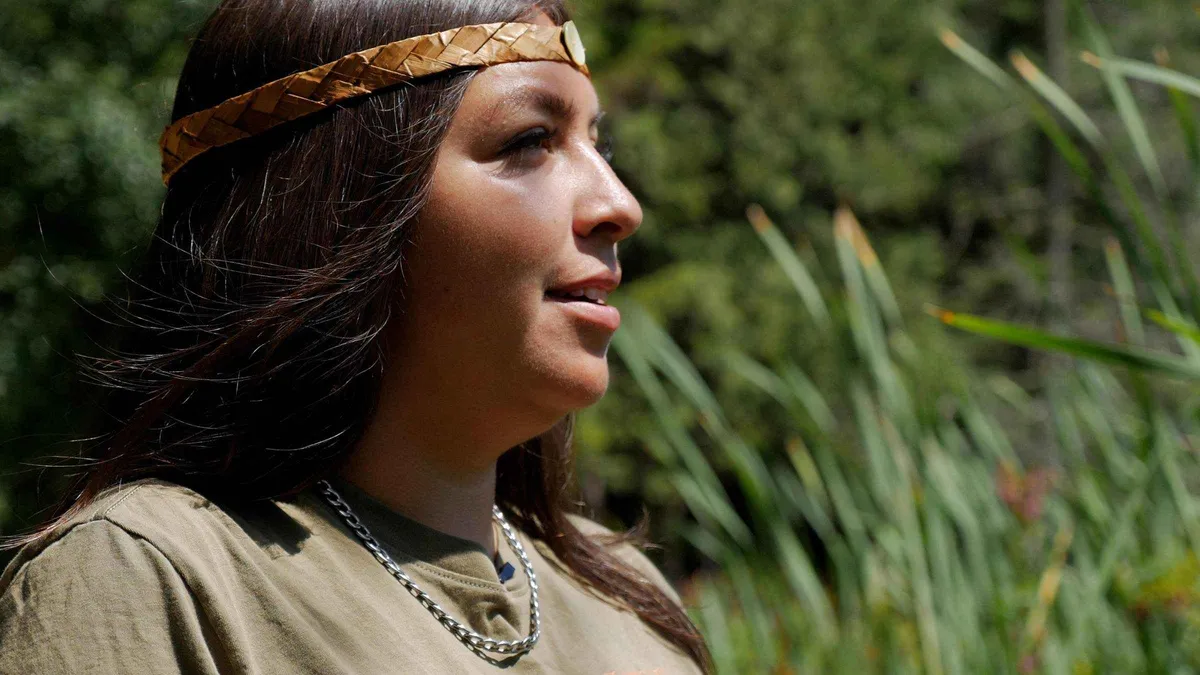
Vancouver: Stanley Park Talking Trees Tour
Ninety minutes and 2.2 km around Beaver Lake with an Indigenous guide explaining how Coast Salish people use the park's trees and plants for food and medicine. Herbal tea is included, and berries in season.
Check Availability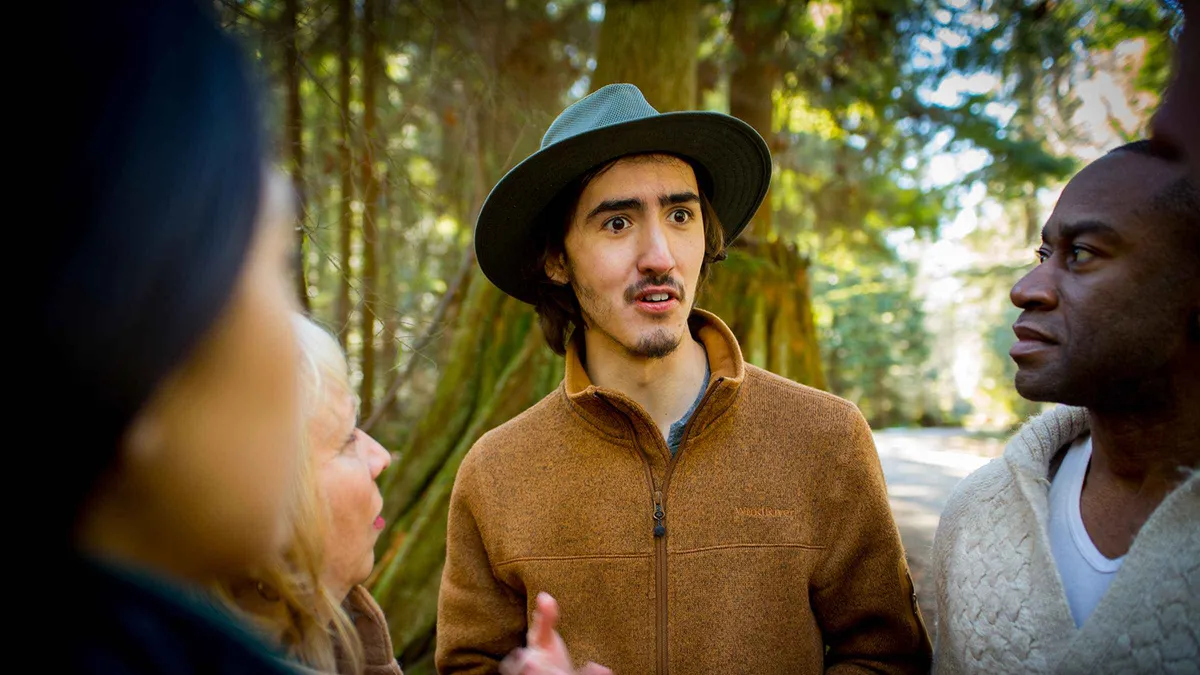 from $28.29
Vancouver: The Dark Secrets of Stanley Park Tour
Two hours off the main paths with a storyteller, covering the forced evictions of Coast Salish families, the smallpox history of Deadman's Island and the park's hidden cemeteries. Adult subject matter, ending back at the aquarium.
Check Availability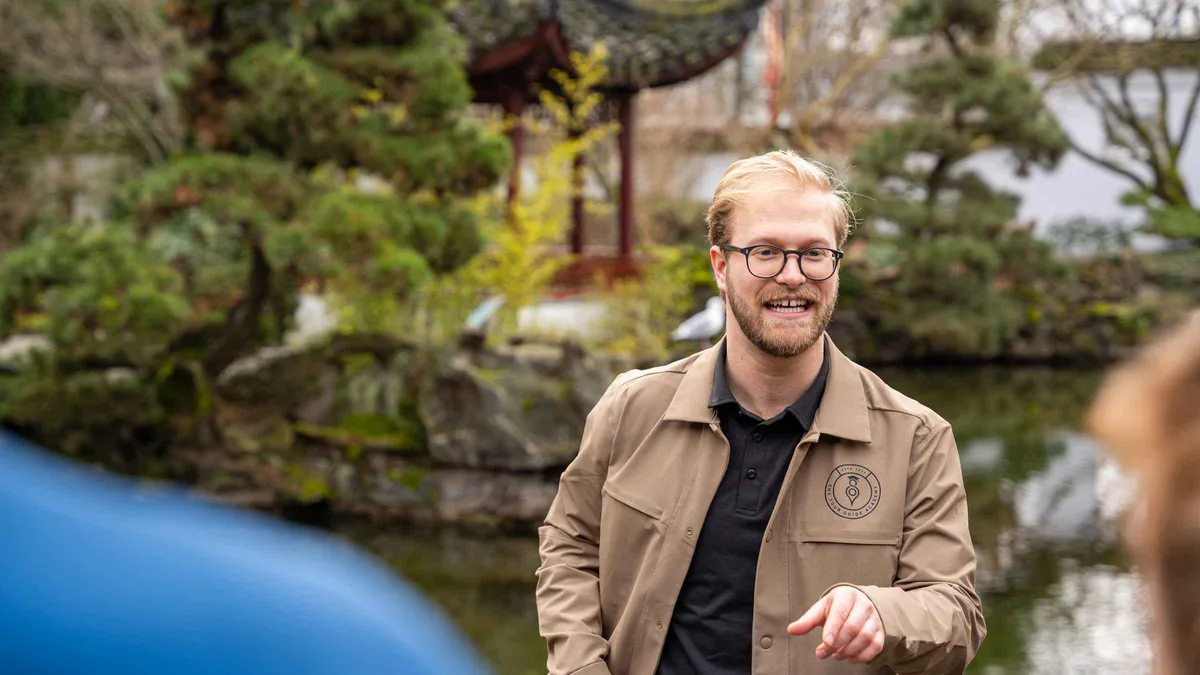 from $5
Vancouver Uncovered: Downtown History & Culture Walk
Three hours on foot through downtown with a local guide covering architecture, street art and how the neighbourhoods fit together. Gratuities are not included and cash is listed among what to bring.
Check Availability from $50.12
Top rated
from $50.12
Top rated Vancouver: Hop-On Hop-Off City Tour, SMALL GROUP "12 STOPS"
A hop-on hop-off route run in 15-seat vans rather than buses, with 24, 48 and 72 hour passes and 12 to 17 stops depending on the pass. The driver is not a guide and no attraction tickets are included.
Check Availability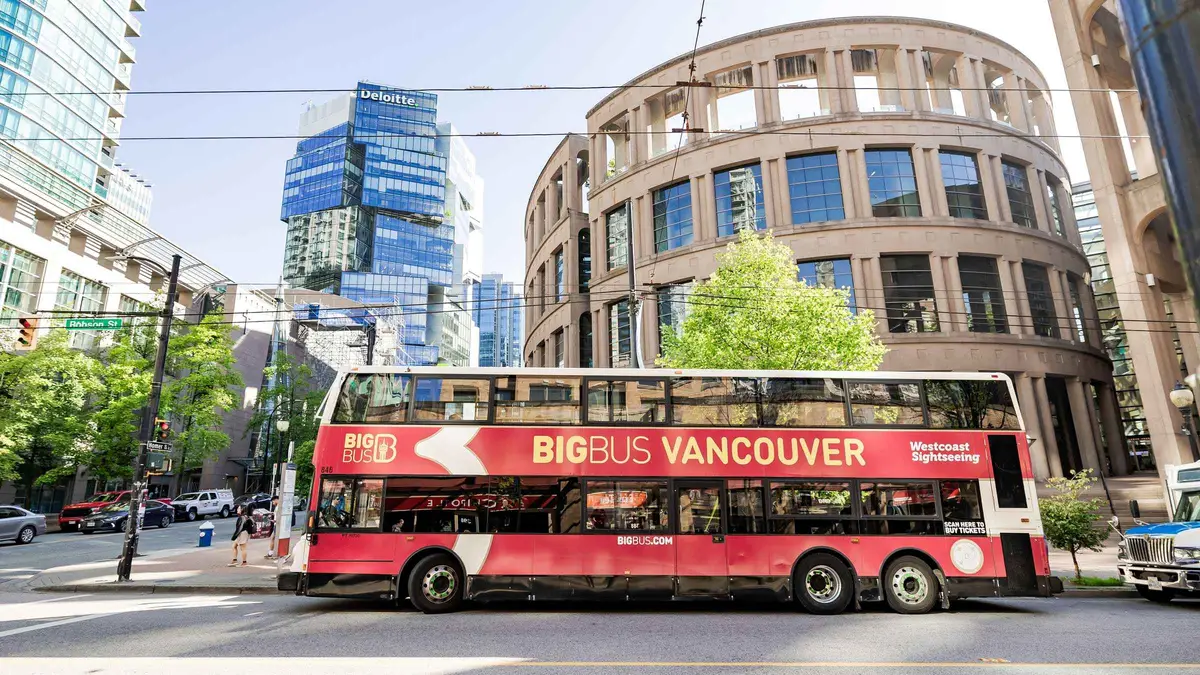 from $52.96
Vancouver: Hop-on Hop-off Tour by Double-Decker Bus
Ten stops on the double-decker route with recorded commentary in seven languages, plus four downloadable audio walking tours of Gastown, Chinatown, Stanley Park and downtown. Ratings on this one sit well below the other city passes.
Check Availability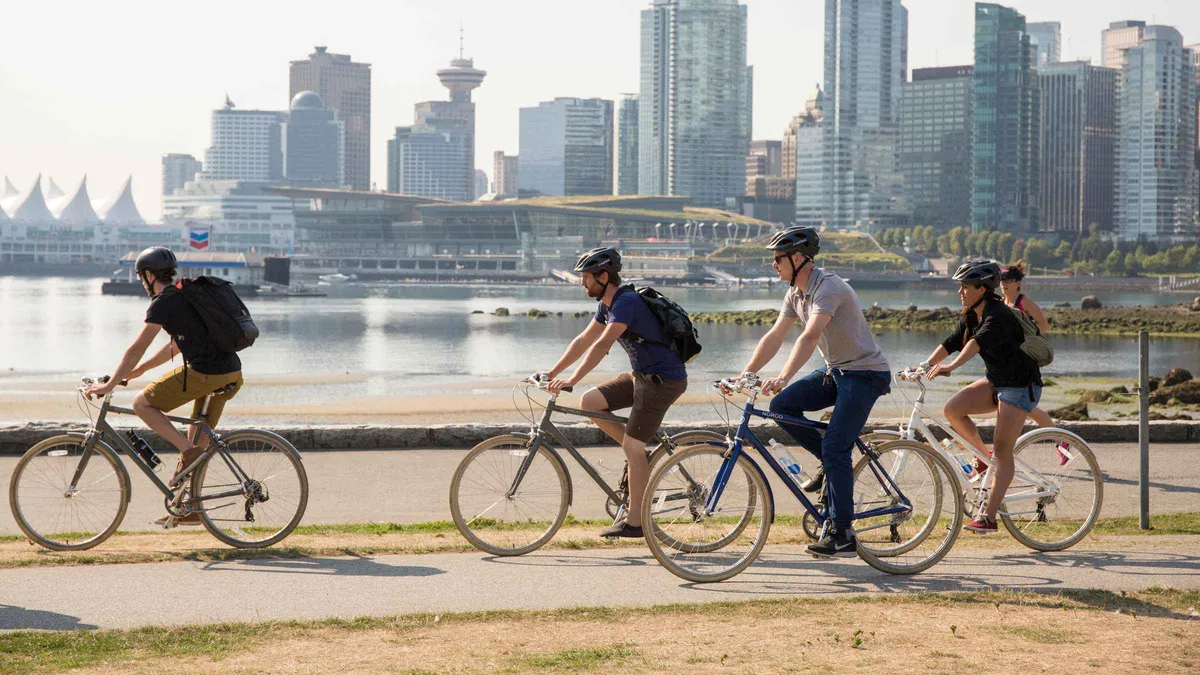 from $83.03
Top rated
from $83.03
Top rated Vancouver: Guided Bike Tour
The five-hour version: Stanley Park, English Bay, a 45 minute break on Granville Island, then False Creek, Chinatown and Gastown. Lunch is bought during the break rather than included, and the pace stays leisurely.
Check AvailabilityPrices, ratings and details are the platform's own, checked in Q3 2026; dollar figures are the listed prices — the platform bills in your account's currency.
What The Museum Of Anthropology Is
MOA is a university museum with a public front, established in 1949 as a department of the University of British Columbia and moved into its present building in 1976. Arthur Erickson designed that building, and the design argument is legible the moment you walk in: the concrete post-and-beam frame takes its proportions from the post-and-beam house architecture of the northern Northwest Coast, and the grounds were landscaped by Cornelia Oberlander. The collection runs to close to 50,000 objects, with a further 535,000 archaeological items in the Laboratory of Archaeology in the same complex.
The museum states its own position on the land it occupies, and the wording is theirs: "MOA acknowledges that it is built on the traditional, ancestral and unceded land of the Musqueam people." The Musqueam community is a neighbour, not a historical reference; the campus sits inside their territory at Point Grey.
What the collection is strongest in
The museum names three strengths on its own about page: one of North America's finest collections of Bill Reid's work, the largest world textile collection in western Canada, and one of Canada's two leading European ceramics collections, the last of these built on Walter Koerner's donation of more than 600 pieces in 1987. About half the holdings are Asian and Oceanian. If your reason for coming to Vancouver is Northwest Coast carving, this is the building, not the Vancouver Art Gallery downtown, which is a picture gallery with a different collection.
Building, founding, land acknowledgement and collection figures from moa.ubc.ca/about/ and moa.ubc.ca/visit/, read in Q3 2026; Erickson and the Koerner ceramics also in en.wikipedia.org/wiki/Museum_of_Anthropology_at_UBC.
The Museum In Nine Dates
A university department that became a building, a building that became a landmark, and an eighteen-month closure that nearly nobody outside Vancouver noticed.
-
1949
Founded as a university department
MOA begins as a department of the University of British Columbia.
-
1976
The Erickson building opens
The concrete and glass museum on NW Marine Drive opens to the public, landscaped by Cornelia Oberlander.
-
1 April 1980
Raven and the First Men is unveiled
Bill Reid's laminated yellow cedar sculpture is unveiled in the rotunda by the then Prince of Wales.
-
1987
The Koerner ceramics arrive
Walter Koerner donates more than 600 pieces of European ceramics.
-
9 March 1999
The sculpture on a stamp
Canada Post issues a commemorative stamp showing Raven and the First Men.
-
2004-2012
On the twenty-dollar note
The sculpture appears on the Canadian twenty-dollar bill for eight years.
-
2010
A fifty per cent expansion
Research laboratories, expanded storage and the Hawthorn Library and Archives are added.
-
November 2020
Seismic upgrade begins
Work starts on strengthening the Great Hall, the glass hall the whole building is organised around.
-
13 June 2024
Reopening
The museum reopens after roughly eighteen months closed, and lists no gallery as closed since.
Founding and expansion from moa.ubc.ca/about/; the 1980 unveiling, the stamp, the banknote and the seismic dates from en.wikipedia.org/wiki/Museum_of_Anthropology_at_UBC and en.wikipedia.org/wiki/The_Raven_and_the_First_Men; the reopening date and current gallery status from moa.ubc.ca/faq/is-the-museum-open-right-now/, read in Q3 2026.
The Great Hall, And What Stands In It
The Great Hall is the reason the building looks the way it does. Erickson glazed one whole side of it from floor to roof and set the totem poles and carved house posts against that glass, so the objects are read against the trees and the water behind them rather than against a wall. It is the single most photographed interior in any Vancouver museum, and it is also the room that closed the museum for eighteen months: the seismic upgrade that began in November 2020 was structural work on this hall, and the museum reopened on 13 June 2024 when it was finished.
The poles and posts here are large, and the room is deliberately quiet. The museum's own programming uses it for performances, so a visit can coincide with one; nothing about that is published far in advance, and the events page is the only place it appears.
Raven and the First Men
The other object people come for stands in the rotunda off the Great Hall. Bill Reid's Raven and the First Men, unveiled on 1 April 1980, is carved from laminated yellow cedar and measures 1.88 by 1.92 metres. It depicts the Haida narrative in which the Raven finds a clamshell on Rose Spit, on Haida Gwaii, and coaxes the first people out of it.
Reid worked with Gidansda Guujaaw, George A. Norris, George Rammell, Reg Davidson and Jim Hart on the carving. It was on the Canadian twenty-dollar note from 2004 to 2012, which is why so many visitors recognise it before they know what it is.
The rest of the building
Beyond the hall, the museum's distinctive room is the visible storage: drawers and glass cases holding thousands of objects at once, arranged for study rather than display. It is the part of MOA that rewards a second hour. The exhibitions running when this page was checked were I Use My Haida Eyes: The History Robes of Jut-ke-Nay Hazel Wilson (to 12 October 2026), Tupananchiskama: Ancient Andean Cosmovision (to 3 January 2027) and the ongoing In a Different Light: Reflecting on Northwest Coast Art.
One area is not open: the Audrey and Harry Hawthorn Library and Archives is by appointment only, and the Museum Grounds and Reflecting Pond are still being restored after the Great Hall work.
Sculpture details from en.wikipedia.org/wiki/The_Raven_and_the_First_Men; exhibitions, the library rule and the grounds restoration from moa.ubc.ca and moa.ubc.ca/faq/is-the-museum-open-right-now/, read in Q3 2026.
How Much Time To Give The Museum
The museum publishes no recommended visit length. These three routings are ours, and the door-to-door column is the number that actually matters here, because the travel out and back is longer than most people's visit.
The trap at MOA is arithmetic, not taste. Ninety minutes inside is a full visit for most people, but the campus is 12 kilometres from the downtown hotels, so a 90-minute museum becomes a half day. Decide which of these you are before you leave, and if the answer is the first one, go on a Thursday evening and pay half.
| How you do it | Time inside | What you skip | Door to door from downtown |
|---|---|---|---|
| Great Hall and the Reid rotunda | 60 to 90 minutes | Visible storage, the temporary shows | About 3 hours |
| The full museum | 2 to 2.5 hours | Nothing | About 4 hours |
| MOA plus the Beaty Biodiversity Museum | 3.5 to 4 hours | Your afternoon; they are separate tickets | A full day out to Point Grey |
One more comparison, because the search results ask it: people wondering whether to skip MOA are usually weighing it against a downtown afternoon. If you have three days in the city, MOA earns half of one; if you have one day, the answer is on the things to do hub and it is probably not this.
Getting There From Downtown, And How Long It Really Takes
The museum publishes bus numbers and the walk from each stop, and publishes no journey time at all. Here is what it does say, with our estimate of the rest marked as ours.
MOA sits at the far west end of the campus, past the point where the buses stop. Every route below is taken from the museum's own visit page; the walk figures are the museum's, and the door-to-door figures are our estimate, because neither MOA nor the university publishes one.
| How you get there | Where it drops you | Walk to the door | Our door-to-door estimate |
|---|---|---|---|
| Westbound 25, 33, R4, 44, 49, 84, 99 B-Line or 480 | UBC Exchange | 15 minutes (museum's figure) | 50 to 70 minutes from downtown |
| Westbound 4 or 14 | University Boulevard | 20 minutes (museum's figure) | 60 to 80 minutes from downtown |
| By car | Paid parking in front of MOA and the Rose Garden Parkade opposite | Under 5 minutes | 30 to 40 minutes, traffic depending |
| Taxi or rideshare | The museum door | None | About 30 minutes off peak |
Parking is CA$4 an hour in front of the museum and in the Rose Garden Parkade across the street, with three accessible spaces. If you are driving, that is the cheapest part of the day. If you are on the bus, the thing to plan around is the walk at the end: 15 or 20 minutes across an exposed campus, which in November is a different proposition from July.
Read the getting around page for how the Compass fare works before you tap on.
Accessibility
The museum states that it is a wheelchair accessible building, with four wheelchairs and portable seats to borrow and three accessible parking spaces. It also publishes the caveat, which is unusually honest: "The gravel path to the west of the building that leads to the Museum grounds is uneven in places."
Bus routes, walk times, parking rate and the accessibility wording from moa.ubc.ca/visit/, read in Q3 2026. Door-to-door figures are our estimates and are not published by the museum.
Hours, The Monday Rule And The Half-Price Thursday
MOA runs on two calendars. From 15 May to 15 October it opens daily, 10 AM to 5 PM. From 15 October to 15 May it closes on Mondays and opens Tuesday to Sunday on the same hours.
Thursdays run late to 9 PM all year, and after 5 PM on a Thursday admission is half price.
That combination makes the Thursday evening the best-value slot in any Vancouver museum: four hours of late opening at roughly $9.42 (CA$13) for an adult. It also makes it the busiest, which is the trade. Note that Vancouver's museums do not follow the European Monday-closure pattern, so a Monday in July is a perfectly good day to come here and a Monday in January is not.
What is closed inside
One area only: the Audrey and Harry Hawthorn Library and Archives is open by appointment. The museum's own answer to "Is the Museum open to the public?" lists no closed gallery, and the grounds and Reflecting Pond are being restored following the Great Hall work. Nothing else on the site suggests the seismic project still affects a visit.
Hours, the seasonal Monday closure and the Thursday half-price rule from moa.ubc.ca/visit/; gallery status from moa.ubc.ca/faq/is-the-museum-open-right-now/, read in Q3 2026.
Five Things Most Visitors Do Not Know
Each line is published by the museum or by the reference record, and each one changes a decision.
- Admission is free for Indigenous people, and free for UBC students, staff and faculty with a card (moa.ubc.ca/visit/).
- There is no combined ticket with the Beaty Biodiversity Museum ten minutes away on the same campus; neither museum publishes one, so a two-museum day costs CA$26 plus CA$18 (moa.ubc.ca/visit/ and beatymuseum.ubc.ca/visit/admission/).
- The Access Pass is CA$35 for a year, which is nine dollars more than a single adult ticket, and is listed on the same page as the day rates (moa.ubc.ca/visit/).
- The museum publishes no recommended visit length and no journey time, only the walk from each bus stop: 15 minutes from UBC Exchange, 20 from University Boulevard (moa.ubc.ca/visit/).
- The building closed for roughly eighteen months for a seismic upgrade to the Great Hall and reopened on 13 June 2024; the only area still restricted is the library, by appointment (en.wikipedia.org/wiki/Museum_of_Anthropology_at_UBC and moa.ubc.ca/faq/is-the-museum-open-right-now/).
At MOA: What To Do, And What Not To
Six decisions to make before you get on the bus.
Do
- Check the date against the Monday rule: closed Mondays only from 15 October to 15 May
- Go on a Thursday after 5 PM if you can, for half price and a museum open to 9 PM
- Allow an hour each way on the bus, plus the museum's own 15 or 20 minute walk from the stop
- Start in the Great Hall, then the rotunda for Raven and the First Men, then the visible storage if you still have attention left
- Take a coat for the campus walk; the last leg is exposed and Vancouver rains from October
Don't
- Do not look for a MOA ticket on a booking platform, because nobody sells one
- Do not expect a combined ticket with the Beaty Biodiversity Museum; there is none
- Do not plan the library into your visit, since it is open by appointment only
- Do not treat this as a downtown attraction; it is 12 kilometres out and the transport table is the part to read
- Do not come here for European painting, which is at the Vancouver Art Gallery instead
Museum Of Anthropology Map: The Campus End Of The Trip
The museum, the two bus drop-off points it names, and the other UBC museum people pair it with.
Museum coordinates from the facts pack; the bus stop positions are approximate, placed from the museum's own directions, and the walk figures are the museum's.
Next Stop From The Museum
Everything here is on the way back from Point Grey, in the order the bus takes you.
Kitsilano Beach
The obvious second half of a MOA day: the buses back from campus run along 4th Avenue and Broadway, and the beach is where you get off. The Kitsilano Beach page has the pool season dates, which end earlier than most visitors expect.
20 minutes back eastMuseums and galleries in Vancouver
MOA against the seven other paid indoor collections in one table, including which of them are open on Mondays. Useful the moment the forecast changes, and the fastest way to see whether the Vancouver Art Gallery or this is the better use of your afternoon.
The full comparisonVancouver Art Gallery
The other big collection, and a different one: paintings, in a 1911 courthouse, with everyone 18 and under free. If you are choosing rather than doing both, the gallery page sets out what is hanging and until when.
Downtown, 45 minutes by busMuseum Of Anthropology Questions
How much does the Museum of Anthropology cost?
$18.83 (CA$26) for an adult aged 19 to 64, $16.66 (CA$23) for a senior 65 and over or a student 19 and over, $9.42 (CA$13) for youth 6 to 18 and nothing for children under 6. Thursdays after 5 PM are half price. The full rate card, including the CA$35 Access Pass, is in the ticket table.
Is the Museum of Anthropology free?
Not generally, but it is free for Indigenous people who self-identify, for UBC students, staff and faculty with a card, for members and for children under 6. There is no free public day; the nearest equivalent is the half-price Thursday evening described in the hours section. If free is the constraint, the free things to do page has the city-wide list.
How long does it take to get through the Museum of Anthropology?
The museum publishes no recommended length. Our routing is 60 to 90 minutes for the Great Hall and the Bill Reid rotunda, and 2 to 2.5 hours if you include the visible storage; the time table sets that against the travel out and back, which is the longer half of the day.
Is the Museum of Anthropology open after the seismic upgrade?
Yes. It reopened on 13 June 2024 after roughly eighteen months closed for the Great Hall seismic work, and its own "is the museum open" page lists no closed gallery. The one restricted area is the Hawthorn Library and Archives, open by appointment, and the grounds and Reflecting Pond are still being restored, as set out in the Great Hall section.
What is inside the Museum of Anthropology?
Close to 50,000 objects, with the Great Hall of Northwest Coast poles and house posts, Bill Reid's Raven and the First Men in the rotunda, the visible storage drawers, the largest world textile collection in western Canada and a European ceramics collection built on a 1987 donation. The room-by-room account is above.
How do I get to the Museum of Anthropology from downtown Vancouver?
The museum names the westbound 25, 33, R4, 44, 49, 84, 99 B-Line and 480 buses to UBC Exchange, then a 15-minute walk, or the 4 and 14 to University Boulevard and a 20-minute walk. It publishes no journey time; our estimate is 50 to 80 minutes door to door, which is the reason the transport table exists. Fares and the Compass card are covered on getting around.
Where MOA Fits In A Vancouver Trip
This is a half-day, and it belongs on the second or third day rather than the first. The strongest shape: leave downtown after breakfast, be at the museum by 10.30, give the Great Hall and the rotunda ninety minutes, then take the bus back east and get off at Kitsilano for the afternoon. That puts you on the water at the best hour and costs one bus fare each way plus the ticket.
If your dates include a Thursday, invert it entirely. Spend the day downtown or on the North Shore, take the bus out at 4 PM, and use the half-price evening, when the museum is open until 9 PM and the light through the Great Hall glazing is at its best. Either way, work it into the days rather than the hours: the three-day itinerary puts it where it does the least damage to the rest of the trip.
How this fits the whole visit is on Vancouver, Canada.
The Museum Of Anthropology On Film
Three views of the building: the museum's own introduction, the news report on the reopening, and a full walk-through for judging how long you would spend.
Welcome to the Museum of Anthropology at UBC
The museum's own introduction to the Great Hall and the collections.
Video: Museum of AnthropologyVancouver's Museum of Anthropology reopens after 18-month seismic upgrade
The news report on the 2024 reopening, and the clearest look at what the seismic work involved.
Video: CBC British ColumbiaMuseum of Anthropology at UBC Vancouver Canada Full Tour
A full walk-through, useful for deciding whether you want the 90-minute or the 2.5-hour visit.
Video: Fantabulous TravelsVideos load from YouTube only when you press play.
Reviewed Q3 2026 (July–September 2026); next review Q4 2026. Prices, hours and terms are set by the venue or operator and confirmed at checkout.
We may earn a commission if you book through one of our links, at no extra cost to you. Full affiliate disclosure